Introduction
Unlike a general wellness checkup, a pre-employment occupational health exam is a targeted evaluation built to answer one question: can this candidate safely perform the essential duties of this specific job?
Employers face real pressure to protect workplace safety, avoid unnecessary or overly broad screening, and stay compliant with ADA, EEOC, and OSHA requirements.
Candidates often walk into these appointments unsure what's expected or when the exam happens relative to a job offer.
This guide covers what these exams typically include, how the right tests get selected by role, the legal timing rules employers must follow, how candidates should prepare, and how screening connects to longer-term injury prevention once someone's on the job.
Key Takeaways
- Match screening tests to the job’s essential functions, physical demands, and known exposures—not a generic checklist.
- Core components often include health history, vitals, functional testing, vision/hearing checks, drug testing, and infection screening when relevant.
- Apply post-offer exams consistently to every candidate in the same job category under ADA, EEOC, and OSHA rules.
- Treat occupational health screening as separate from criminal, employment, or identity background checks.
What Is Pre-Employment Occupational Health Screening?
Pre-employment occupational health screening is a set of job-related medical evaluations completed during hiring to determine whether a candidate can perform essential duties safely, with or without reasonable accommodation. It's not a background check, and it's not a diagnostic workup for unrelated conditions.
Several related terms get used interchangeably, but they aren't identical:
- Occupational health assessment covers the broader evaluation of job-related fitness.
- Pre-employment physical exam typically means a provider reviews history, vitals, and a basic physical exam.
- Functional capacity or physical ability test measures whether someone can perform job-simulated tasks like lifting or climbing.
- Drug and alcohol testing screens for substance use per employer policy or regulation.
- General wellness visit is not job-related and doesn't belong in this category at all.
Scope Varies Widely by Role
Screening depth tracks the job's real demands:
- Office roles with no physical demands may need little to no screening
- Warehouse material-handling roles often need functional testing
- Manufacturing jobs involving machinery may add vision, hearing, and exposure-specific checks
- Healthcare or food-processing roles often require immunization review or infectious-disease testing for infection control
The provider's job is to evaluate work-related fitness and relevant risk, not to go fishing for unrelated medical information. Three groups typically share responsibility:
- Employer or EHS defines the actual job demands
- Occupational health provider conducts the assessment
- HR maintains process consistency and documentation controls
Before ordering any tests, employers should document a job-demand profile. Cover items such as:
- Lifting, reaching, climbing, and repetitive motion
- Driving and shift demands
- Noise, respiratory, chemical, or biological exposure risks
- Required protective equipment
This profile becomes the justification for every test ordered. DORN Companies builds this kind of profile as part of its POET (Post-Offer Employment Testing) program, where a Certified Ergonomic Specialist analyzes a role's essential functions before any custom testing is designed.
Why Pre-Employment Screening Matters for Employers and Workers
A well-designed assessment does more than check a compliance box. It identifies whether a candidate can safely handle essential tasks, flags preventable onboarding injuries before they happen, and establishes any needed restrictions before day one.
The stakes are higher than many employers realize. Musculoskeletal disorders alone accounted for 272,780 private-sector days-away-from-work cases in 2018, or roughly 30% of all such cases, according to Bureau of Labor Statistics data. Transportation and warehousing carried an even steeper burden, with an MSD incidence rate of 77.1 per 10,000 full-time workers and a median of 26 days away from work per case.

New hires carry particular risk. Little job experience and unfamiliar hazards combine to make early tenure a vulnerable window, which is exactly when screening and onboarding practices matter most.
Employer benefits of getting this right include:
- More consistent, defensible hiring decisions
- Better safety planning before problems surface
- Reduced disruption from mid-role injuries or restrictions
- Closer alignment between job demands and actual worker capability
Worker benefits include:
- Identifying accommodations early
- Clarifying what the job really requires
- Getting appropriate referrals when needed
- Avoiding placement into tasks that create unreasonable risk
Screening alone doesn't prevent injuries, though. It's one checkpoint, not a program. Employers still need supporting controls such as:
- Job-specific training
- Ergonomic design
- Equipment controls
- Early injury reporting
- Accessible worker support
Once screening flags high-risk tasks, ergonomics and injury-prevention work typically pick up from there. DORN's approach, built around Body, Behavior, and Environment factors, is designed to close the gap between "cleared to work" and "actually set up to do the work safely."
What Tests and Exams May Be Included?
No single test package fits every job. Each test should be justified by an essential function, a known hazard, a regulatory requirement, or a legitimate safety objective. Adding tests beyond that invites unnecessary risk and cost.
General Medical Evaluation
This may include a health history relevant to the job, current medications and allergies, prior injuries or surgeries, vital signs, a basic physical exam, and range-of-motion or strength observations. Not every component applies to every role—an accountant and a forklift operator won't get the same exam.
Physical Ability and Functional Testing
This covers job-simulated tasks that should mirror real demands, not arbitrary fitness standards:
- Lifting, carrying, pushing, and pulling
- Gripping, bending, and reaching
- Climbing, balance, and endurance
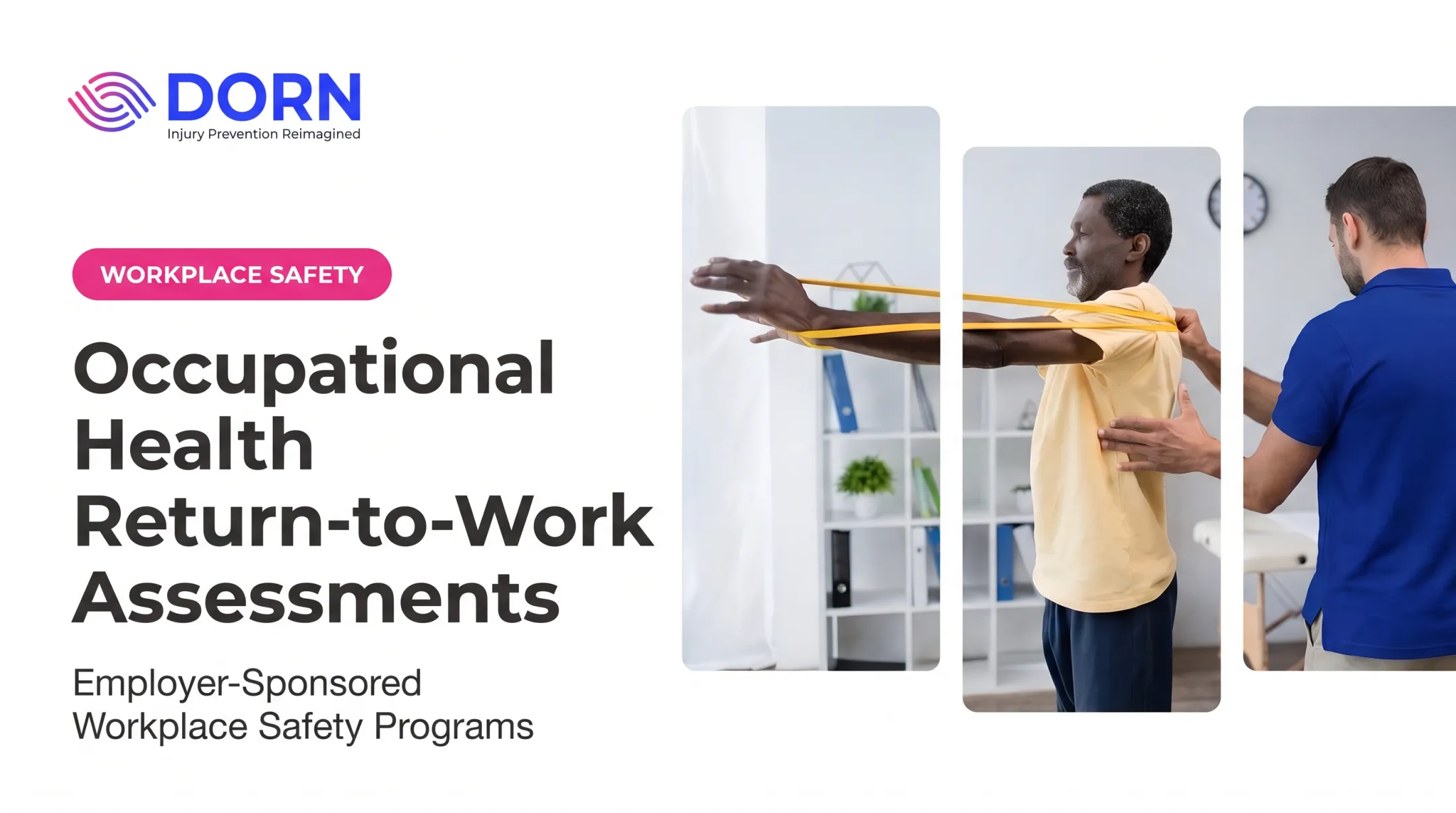
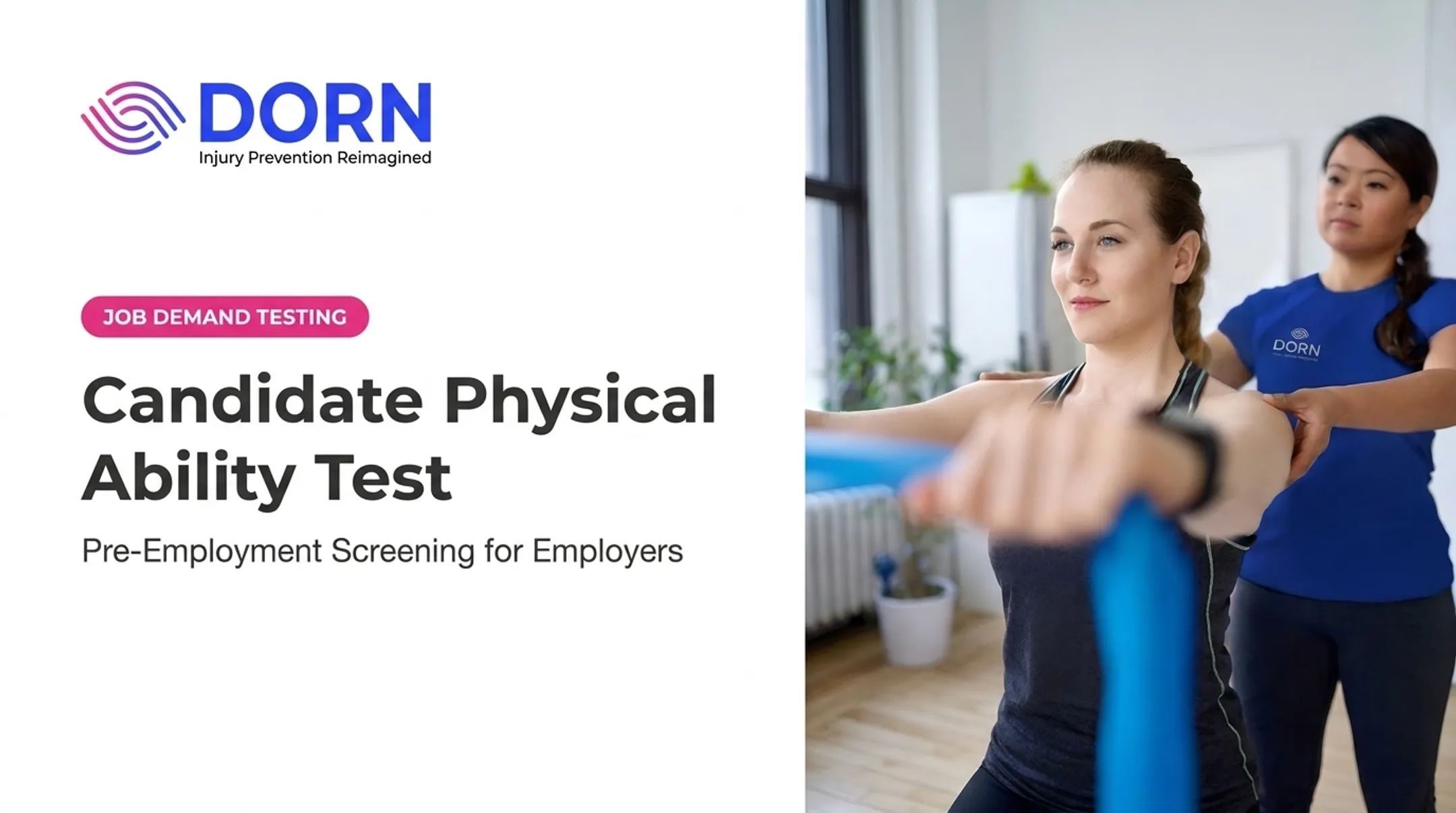
DORN Companies' POET testing sits in this category. A Certified Industrial Ergonomist designs role-specific tests, and candidates complete them at a clinic or on-site with proper safeguards. The goal is baseline data on motion, strength, and functional status—not a generic fitness score.
Sensory and Exposure-Related Exams
Depending on the role, this can include vision testing, audiometry, respirator questionnaires and fit testing, or pulmonary evaluation. Hearing conservation programs, for example, kick in once workers face an 8-hour time-weighted average of 85 decibels or higher, per OSHA's noise exposure standard, and require a baseline audiogram within six months of that exposure starting.
Laboratory and Health-Status Screening
Some roles require drug and alcohol testing, tuberculosis testing, immunization or titer review, or other infectious-disease screening. Requirements vary by job, facility, employer policy, and law, so no universal panel applies.
A quick reference by role:
| Role Type | Likely Screening |
|---|---|
| Office-based work | Minimal unless specific hazards exist |
| Warehouse/manufacturing | Functional testing, vision/hearing, exposure screening |
| Healthcare/food processing | Immunization, TB, titer review |
| Driving/public safety | Federal or state regulatory standards |
How Employers Should Design a Compliant Screening Process
Getting the sequence right protects both the company and the candidate. Use this order:

- Define essential job functions before deciding what to test for.
- Select an appropriate provider and test package matched to those functions.
- Extend a conditional job offer where a medical exam or disability-related inquiry is involved.
- Give candidates consistent instructions about what the appointment includes.
- Conduct the exam through a qualified occupational health provider.
- Review only job-related results to make the employment decision.
- Document the decision appropriately and consistently.
Timing Isn't Optional
Under 29 CFR 1630.14, disability-related inquiries and medical exams are generally prohibited before a job offer. After a conditional offer, you may require an exam—but only if every entering employee in that same job category gets the same exam, regardless of disability. Consistency is the legal requirement, not just good practice.
Confidentiality Isn't Optional Either
Handle medical information with strict separation and limited access:
- Store medical records apart from ordinary personnel files
- Restrict access to people who need it for compliance or accommodation decisions
- Share with managers only work status, restrictions, or accommodation needs—not full clinical detail
Results Aren't Always Pass or Fail
Outcomes can include cleared, cleared with restrictions, pending additional information, or not cleared for a specific role. Treating every result as binary misses accommodation opportunities and can create legal exposure.
Those outcome paths only work if your provider can run consistent exams, protect records, and report job-related findings clearly. When you select a provider, look for:
- Occupational health expertise tied to your industry and job demands
- Role-specific testing instead of one-size-fits-all exams
- Secure documentation and restricted data handling
- Predictable turnaround times that support hiring timelines
- Clear, consistent instructions for every candidate
- Up-to-date knowledge of applicable screening rules
- Coordination across multiple sites when you hire in more than one location
How Candidates Can Prepare for an Occupational Health Assessment
Preparation reduces surprises and helps the appointment go smoothly. Before you show up, confirm exactly what's included: fasting requirements, forms to complete, whether drug or alcohol testing is part of it, and whether job-specific movement testing is expected.
What to bring:
- Valid identification
- Employer authorization forms
- A list of medications and allergies
- Relevant medical records, if requested
- Corrective lenses or hearing aids
- Vaccination records
- Contact information for a treating provider, in case follow-up is needed
Practical steps:
- Get adequate rest beforehand
- Stay hydrated unless told otherwise
- Wear comfortable clothing and appropriate footwear if movement testing is involved
- Follow any medication instructions from a clinician
Don't stop a prescribed medication or alter your normal routine to try to influence the outcome. It rarely helps and can create inaccurate results.
When answering health-history questions, be accurate. Ask the provider to clarify anything unclear, and disclose relevant restrictions or prior injuries. The focus should stay on what's relevant to safe job performance, not your entire medical history.
After the assessment, possible next steps include:
- Additional testing or a request for records
- Temporary restrictions
- An accommodation discussion
- A work-status result sent to the employer, without unnecessary private detail
From Screening to Ongoing Injury Prevention
A pre-employment exam is one point in a much longer safety lifecycle. It can't replace ergonomic assessments, safe work procedures, training, equipment upgrades, early intervention, or worker feedback loops.
Employers can use aggregated, non-identifying findings and injury trends to spot recurring risks in lifting, repetitive motion, workstation design, fatigue, or material handling—without exposing anyone's individual medical information.
DORN reports that ergonomic issues account for 33% of all worker injuries and illnesses, and that planning, training, and technology support can cut those issues by more than 60% annually when applied consistently.
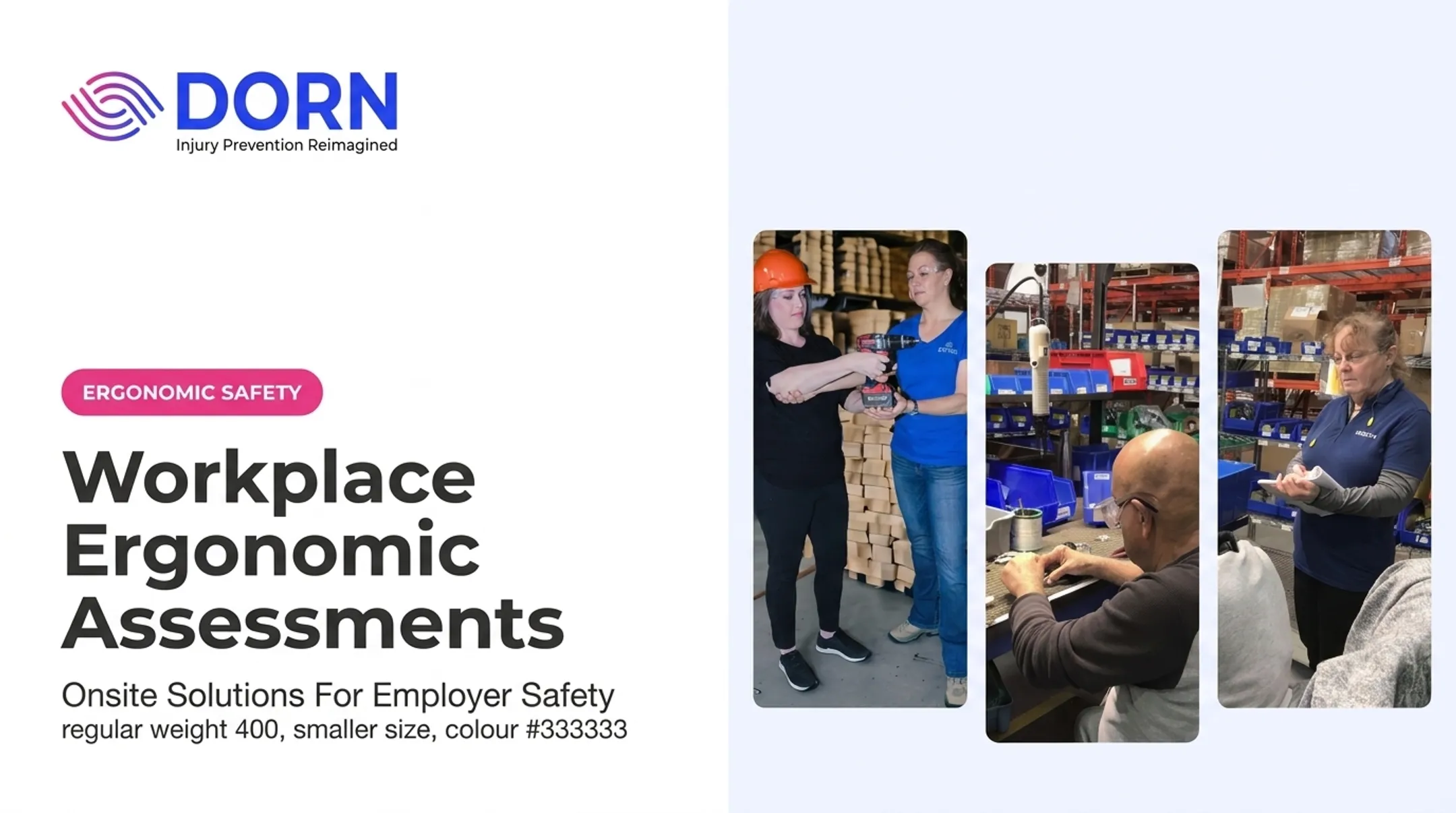
This is where DORN's role picks up after screening identifies a concern. DORN's Body, Behavior, and Environment framework pairs ergonomic assessments, biomechanics coaching, workplace rehabilitation, and technology like AI motion capture to address risks a one-time exam can't fix alone.
In one case, an international manufacturer's injury rate dropped 81% in twelve months—from 21 incidents to 4—after engineering, administrative, and behavioral changes were applied together rather than as isolated fixes.
A practical follow-through sequence:

- Review job demands against actual tasks performed
- Observe real work, not just job descriptions
- Involve employees in identifying friction points
- Prioritize engineering or administrative controls first
- Provide targeted training
- Measure safety and absence trends over time
- Reassess the program periodically
None of this requires waiting for an injury to happen first.
Frequently Asked Questions
What does a pre-employment health assessment consist of?
It typically includes a job-specific medical history review, physical exam, and vital signs. Role-dependent tests may cover strength, vision, hearing, drug screens, respiratory checks, immunizations, or infectious-disease screening.
What tests are done in occupational health?
Tests vary by role. They may include physical ability testing, drug and alcohol screening, vision and hearing exams, respirator or pulmonary assessments, immunization or titer review, TB testing, and other exposure-related evaluations.
What questions are asked during a health assessment?
Expect questions about relevant medical history, medications, allergies, prior injuries or surgeries, current restrictions, and your ability to perform essential job tasks. Give complete, honest answers so the provider can assess fit for the role.
How do I prepare for an occupational health assessment?
Confirm what the appointment includes, then bring ID, employer forms, a medication list, corrective devices, and any requested records. Wear suitable clothing and follow fasting instructions if you were given any.
What should I avoid before health screening?
Don't stop prescribed medication, hide relevant health information, or ignore employer instructions. Avoid prohibited substances and strenuous activity right before a job-related physical test.
What does occupational health mean on a background check?
Occupational health screening is generally separate from criminal, identity, employment, or education background checks. It evaluates health or functional factors relevant to workplace safety, not personal history.