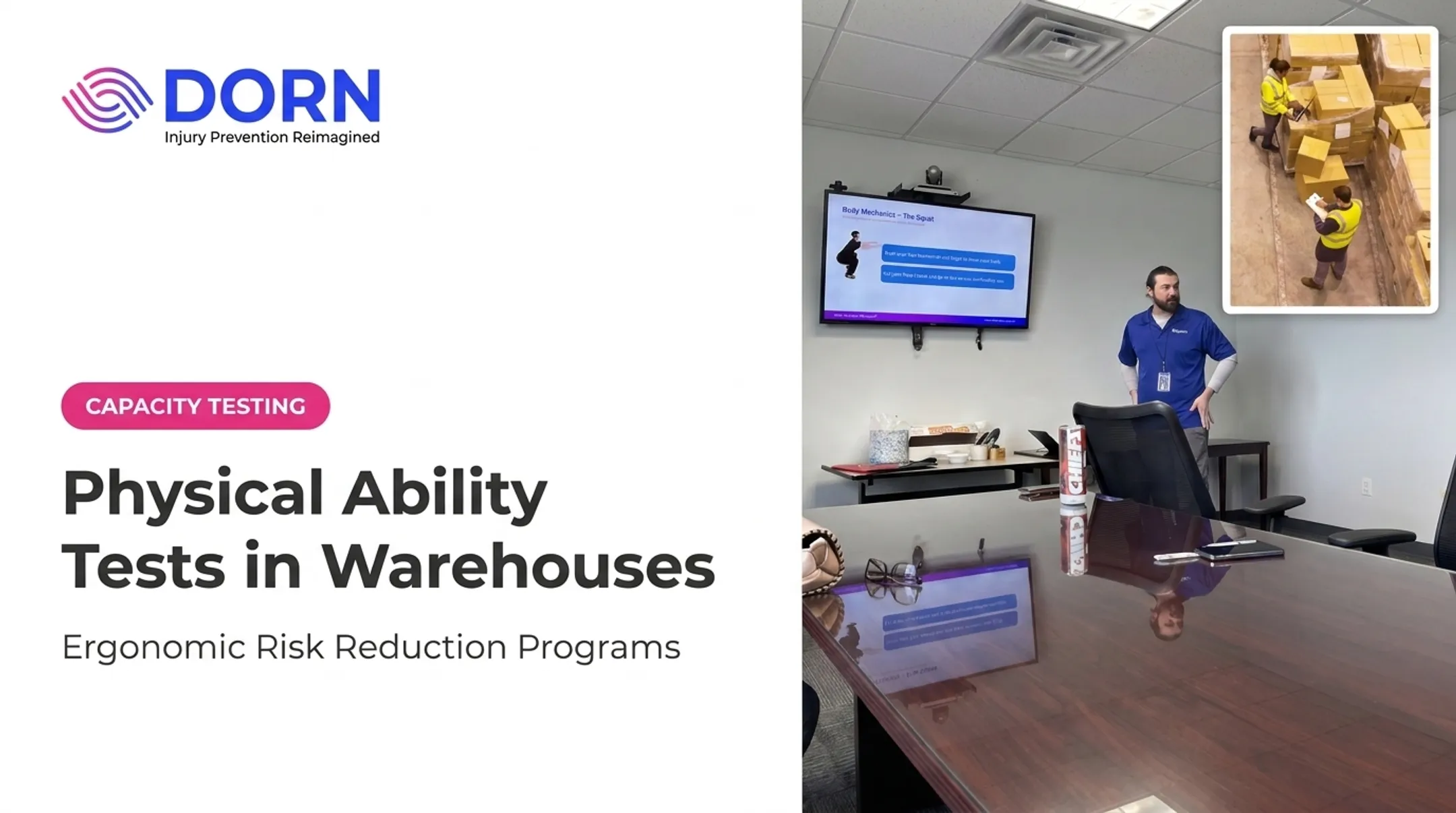
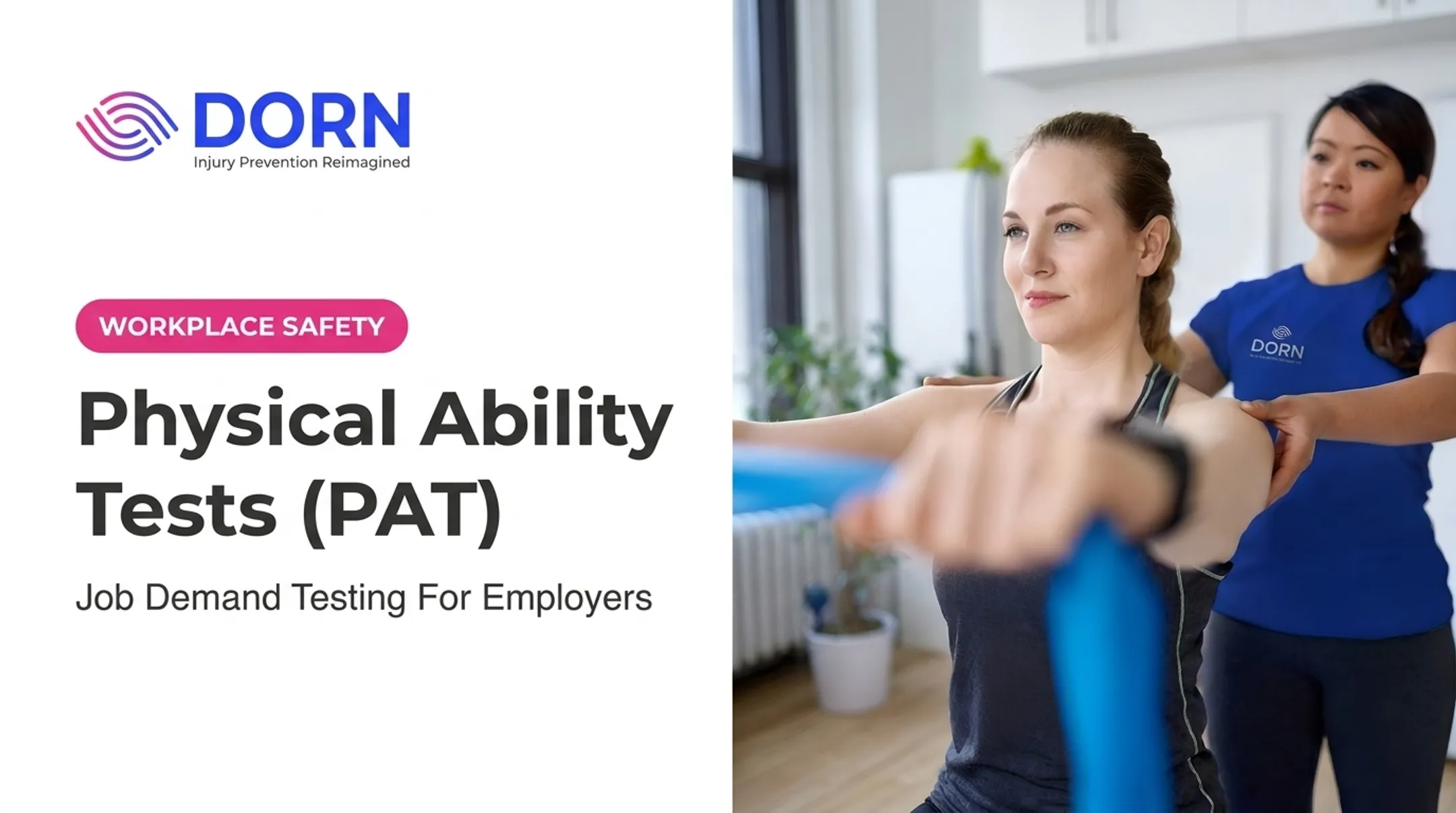
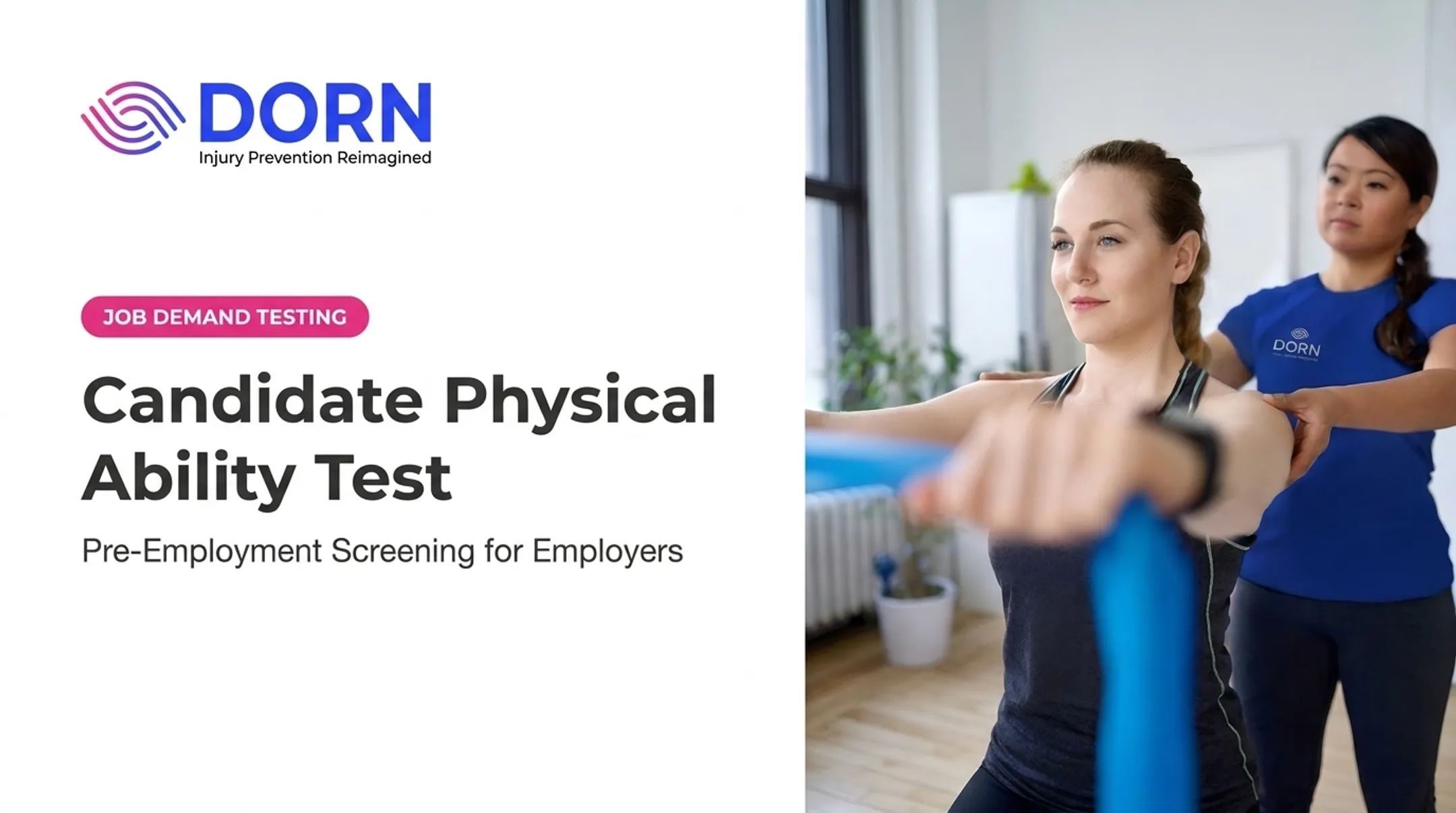
That's the gap Post-Offer Employment Testing (POET) is built to close. POET is a conditional-offer assessment: it measures whether a specific candidate can safely perform the essential physical functions of the specific job they've been offered, not a generic fitness or health standard.
This article covers what POET measures, how to implement it consistently, what candidates can expect, and how results should factor into fair employment decisions. Note: this article is educational, not legal advice — always consult employment counsel before deploying a POET program.
Key Takeaways
- POET evaluates physical capability for essential job functions after a conditional offer is made.
- A defensible test starts with a current job demands analysis, not an arbitrary fitness benchmark.
- Consistency, confidentiality, and accommodation processes are non-negotiable legal safeguards.
- Pair testing with ergonomic job design rather than using it as a standalone hiring filter.
What Is Post-Offer Employment Testing?
POET is a job-specific physical assessment. Rather than asking whether someone is generally healthy, it answers a narrower question: can this candidate perform the essential functions of this job?
It is used for roles with measurable physical demands such as:
- Lifting, pushing, or pulling
- Repetitive motion or awkward postures
- Climbing or prolonged standing
Timing matters here. Under 29 CFR 1630.14, a medical examination or inquiry may occur after a conditional job offer and before the employee starts duties, but only if every entering employee in that same job category is tested the same way, regardless of disability status. That's the legal gate POET operates within.
POET vs. Other Pre-Employment Screens
Employers often lump every pre-hire check into one bucket. They're not interchangeable:
- Skills tests measure job knowledge or technical competence.
- Drug screens check for substance use.
- General medical exams assess overall health, often unrelated to specific tasks.
- POET measures functional capacity against the essential physical demands of one defined role.
A generic test applied to every job, such as requiring every hire to lift 50 pounds whether the role needs it or not, isn't defensible.
A warehouse order selector, a manufacturing line worker, and a food-processing employee each face different loads, postures, and repetition rates. The test has to reflect the actual job, not a one-size-fits-all standard.
What Does a POET Test Consist Of?
Everything starts with a job demands analysis (JDA). Before any test is designed, this process documents the role's real demands:
- Essential tasks, loads, and forces
- Repetition rates, work heights, and reach requirements
- Duration and environmental conditions
Skip this step, and the test has no defensible foundation.
Core Assessment Categories
Common POET components include:
- Lifting and carrying: weight, distance, frequency, and height (floor-to-waist, waist-to-shoulder)
- Pushing and pulling: force required, handle height, and distance
- Positional tolerance: squatting, kneeling, reaching, overhead work, and how long each position can be sustained
- Balance and climbing: for roles requiring ladders, platforms, or uneven surfaces
- Task endurance: representative repetition and duration matched to shift demands
Only the measures relevant to a given role should be included. A desk-adjacent quality inspector doesn't need a climbing evaluation.
At DORN, a Certified Ergonomic Specialist analyzes each role's essential functions before building a custom test, which is the same foundation any credible POET program needs. Tests may simulate actual work tasks through controlled demonstrations, timed movements, or load handling. They should always be designed and supervised by qualified professionals, not administered from a generic template.
Here's how it maps for a manual-labor role like an order selector:
| Essential Task | Corresponding POET Activity |
|---|---|
| Lifting 40-lb cases to shoulder height | Simulated lift-and-carry at matched weight and height |
| Pushing loaded pallet jacks | Static push/pull force test |
| Repetitive bending to lower shelves | Timed squat-and-reach sequence |
Results should compare demonstrated capability against documented job requirements, not an athletic standard or an unrelated health marker like body weight. That distinction separates a legitimate functional test from a general physical exam.
How Employers Can Implement POET Correctly
A defensible POET program follows a consistent sequence:
- Identify the role and confirm it involves measurable physical demands.
- Conduct or update the job demands analysis. Don't rely on outdated job descriptions.
- Define essential functions in writing, distinguishing them from marginal duties.
- Make the conditional offer before any testing begins.
- Schedule the assessment using a standardized protocol.
- Administer the same protocol to every candidate in that job category.
- Document results against the job requirements, not subjective impressions.
- Communicate next steps clearly, including accommodation options if needed.

This isn't a solo HR project. Operations, safety teams, supervisors, and qualified occupational-health professionals should all help build the protocol. Supervisors know real-world task variations; occupational-health professionals know how to measure capacity safely.
Consistency, Communication, and Compliance
Consistency is the backbone of a legally sound program. Every candidate for the same job should face the same:
- Criteria and scoring method
- Equipment and instructions
- Retesting rules
Candidates also need clear information upfront: what the test involves, how to prepare, what to wear, and who can access results.
Privacy matters just as much as consistency. Medical information from POET must be kept separate from ordinary personnel files.
The EEOC's 2018 procedures for reasonable accommodation describe an interactive process employers should follow when a candidate needs accommodation during testing. A failed simulation should open that conversation, not end the hiring process.
Documented job demand data also supports injury-prevention planning beyond hiring. DORN's ergonomic assessments and Body, Behavior, and Environment approach help employers connect that documentation to broader workplace safety programs. Always consult current legal counsel before deploying or updating a POET protocol.
Benefits and Limitations of POET
Done well, POET creates alignment between what a job actually requires and what a candidate can actually do. For employers, that can mean:
- Earlier identification of task-related risk before it becomes an injury
- Better-informed onboarding and placement decisions
- Potential reductions in injuries, absenteeism, and workers' compensation costs
For candidates, a well-designed program offers clearer expectations, safer placement, and earlier conversations about accommodations or task modifications that support success on the job.
What the Evidence Actually Shows
A 2022 matched observational study of POET participants across four employers found lower first-year costs among tested employees, all statistically significant:
- $528 in medical costs
- $157 in short-term disability
- $68 in workers' compensation
- $44 in drug costs per employee
A related four-year analysis found preventable motor-vehicle costs of $1,191 versus $2,312 for non-tested employees.
But that same study reported higher turnover among POET employees (70.0% versus 62.8% for controls) and flagged real limitations: it was observational, couldn't rule out confounding factors, and didn't capture differences in daily duties within job titles.

Treat these numbers as an association worth watching, not a guaranteed outcome.
POET has real limits. It cannot:
- Eliminate workplace hazards
- Predict every future injury
- Replace ergonomic controls
It also should never be used to exclude a candidate based on health information unrelated to the essential functions being tested.
What Happens After the Test?
A POET result typically falls into one of four outcomes:
- The candidate demonstrates the required capabilities and moves forward.
- The candidate needs an accommodation or job modification review.
- The result is unclear, requiring clarification or retesting under a documented policy.
- The candidate does not demonstrate the essential functions as currently defined.
A failed assessment is not a medical diagnosis or a permanent judgment. Use it to check whether the protocol still matches the job and whether accommodation obligations apply before any final decision.
Using Results Beyond the Hiring Decision
POET data is most useful in aggregate. Patterns across candidates can reveal workstation redesign needs, lifting instruction gaps, fatigue risks, or where early symptom reporting should be reinforced. Treating POET as a one-time hiring filter wastes that insight.
Employer checklist for reviewing a POET program:
- Confirm job demands documentation is still current
- Audit that administration remains consistent across candidates
- Review any adverse outcomes for accommodation compliance
- Protect candidate medical data in separate, secure files
- Track relevant safety and workforce indicators over time
When POET or incident data points to recurring high-risk tasks, the job itself usually needs attention, not just the hiring filter. DORN's ergonomic assessments and injury-prevention programs are built for that follow-up, turning testing insight into workstation and task-level changes.

Frequently Asked Questions
What does POET testing mean?
Post-Offer Employment Testing evaluates whether a candidate can physically perform the essential functions of a specific job. It is done only after a conditional job offer has been made.
What does a POET test consist of?
It typically includes job-specific activities like lifting, pushing, pulling, reaching, positional tolerance, or endurance tasks. The exact combination depends entirely on the role being tested.
What are some examples of pre-employment tests?
Common types include skills tests, background checks, drug screens, general medical exams, and POET. POET is unique in that it occurs after an offer and focuses specifically on job-related physical functions.
How to pass a pre-employment test?
Review the job's physical requirements, follow any prep instructions, and disclose accommodation needs through the proper channel. Don't try to push past your actual capabilities.
What would fail a pre-employment physical?
A candidate fails only when they cannot demonstrate the job's defined essential functions under the standardized protocol. Unrelated health information should not decide the result, and reasonable accommodations must be considered.
Can you still get hired if you fail an assessment test?
It depends on the job's essential functions, whether accommodation could change the outcome, and the employer's retesting policy. Failing one component doesn't automatically end the hiring process.