
Introduction
In 2024, construction accounted for 1,034 of the nation's 5,070 fatal workplace injuries—roughly 20% of all workplace deaths in the US, according to the Bureau of Labor Statistics. One in five workplace deaths still falls on construction crews.
Every incident carries real operational weight. Construction injuries cost US businesses an estimated $11.5 billion a year, and an injured worker typically misses about 11 workdays.
Those absences stack up fast: schedule delays, equipment damage, workers' comp claims, OSHA investigations, and the morale hit when a crew watches a coworker get hurt.
Job sites shift constantly. Weather changes, new trades show up, materials arrive, equipment moves around. Safety can't be a laminated poster in the trailer. It has to run as a repeating cycle:
- Identify hazards
- Select controls
- Train the crew
- Communicate clearly
- Monitor conditions as work progresses
This guide walks through each step so you can build a job site safety system that holds up as conditions change.
Key Takeaways
- Treat every task as site-specific: assess hazards and set controls before work begins.
- Control Focus Four hazards first—falls, struck-by, caught-in/between, and electrocution—then heat, dust, noise, and ergonomic strain.
- Apply the hierarchy of controls before reaching for PPE as a first solution.
- Run JSAs, toolbox talks, and inspections on a recurring basis—not as one-time paperwork.
- Give every worker, subcontractor, and visitor a clear path to report hazards and stop unsafe work.
Safety Guidelines for Construction Job Sites
Solid construction safety combines several moving parts: site planning, hazard identification, engineering and administrative controls, competent supervision, worker participation, appropriate PPE, and compliance with current OSHA or applicable state-plan requirements. Miss any one piece and the rest weakens.
The major risk categories on most sites include:
- Falls from elevated surfaces, roofs, ladders, and scaffolds
- Struck-by incidents involving vehicles, suspended loads, or falling material
- Caught-in/between hazards from trenches, equipment, or collapsing structures
- Electrical contact from overhead lines or temporary power
- Excavation and trenching collapse
- Hazardous substances, including silica dust and chemical exposure
- Noise, heat, and weather exposure
- Musculoskeletal strain from lifting and repetitive motion
No single checklist or piece of protective gear covers all of this. Safety depends on the environment, the specific task, how equipment is configured, worker competence, communication between trades, and conditions that change hour to hour. That's why pre-task planning, active monitoring, and post-task review all matter more than a one-and-done orientation.
General Safety Precautions
Baseline controls set the floor for everything else on site. These include:
- Site orientation for every new worker and visitor
- Task-appropriate PPE, verified for fit and current OSHA requirements
- Controlled access points and clear, marked walkways
- Ongoing housekeeping - OSHA specifically requires clearing scrap lumber with protruding nails and combustible debris from work areas and passageways
- Separated material storage and vehicle traffic routes
- Adequate lighting, signage, and barricades at hazard points
- Guarded floor and wall openings
PPE selection should match the task, not a generic standard kit. Head, eye, foot, hand, hearing, respiratory, high-visibility, and fall protection equipment all need pre-use inspection. Damaged gear or tools get tagged and removed from service immediately, not "used until the next delivery."
Pre-use checks matter just as much as PPE. Ladders, scaffolds, temporary power cords, and machinery should be inspected before every shift, not just when something looks obviously wrong. Under OSHA's general provisions, employers must conduct frequent, regular inspections of the job site, materials, and equipment through a designated competent person.
Reporting has to be simple and fast. Workers need to know exactly who receives a hazard report, how urgent issues get escalated, and when it's appropriate to stop work outright. Daily site walks, toolbox talks, and documented corrective actions keep these controls active instead of theoretical.
Pre-Task Planning and Job Safety Analysis
A job safety analysis (JSA), also called a job hazard analysis under OSHA's own terminology, breaks a task into steps, identifies the hazards at each step, and assigns controls before anyone picks up a tool. It's the single most useful planning document on a job site because it forces specificity instead of assumption.
The core process runs in five steps:
- Select the job - prioritize tasks with the highest injury history or severity potential
- Break it into sequential steps - list the actual order of operations, not a general description
- Identify hazards at each step, including tools, materials, and environment
- Determine controls using the hierarchy below
- Communicate and review the completed analysis with the crew performing the work
That hierarchy matters more than most sites treat it. Per NIOSH guidance, controls rank from most to least effective as elimination, substitution, engineering controls, administrative controls, and PPE.

A material-handling example makes this concrete: redesigning a lift with a hoist or conveyor eliminates the strain hazard entirely. Training a worker on proper lifting technique, or issuing a back support belt, only manages the risk after it's already present.
A JSA isn't a one-time document. Revisit it when the weather changes, the crew rotates, new equipment shows up, materials change, work sequencing shifts, other trades start working nearby, or a near miss occurs.
A practical pre-task sequence looks like this:
- Review drawings and permits
- Walk the actual work area
- Coordinate with affected trades
- Confirm equipment and emergency arrangements
- Brief the crew and get real acknowledgment or questions before work starts
Safety During Active Construction Operations
This is where the highest-consequence hazards live: falls, struck-by incidents, caught-in/between exposures, electrical contact, excavation collapse, and equipment blind spots.
Work at height requires planning access before anyone climbs, guarding edges and openings, inspecting ladders and scaffolds before use, and selecting fall protection appropriate to the task.
Under OSHA's fall protection standard, employees working at a leading edge 6 feet or more above a lower level need guardrails, safety nets, or a personal fall-arrest system. Rescue planning has to exist before the work starts, not get improvised after a fall arrest activates.
Equipment and vehicle controls should include:
- Trained, authorized operators only
- Pre-use inspections logged, not assumed
- Designated travel routes and marked exclusion zones
- Spotters and standard communication signals where visibility is limited
- Backing controls and clear separation between pedestrians and moving equipment
Electrical hazards demand located utilities, maintained clearances from overhead lines, protected temporary power, GFCI use, and a hazardous-energy control process during servicing. OSHA's construction-specific rule requires that deenergized circuits be tagged at every point of energizing before work begins.
Excavation work carries its own rules. A competent person must inspect trenches daily, before work starts, and after any rain or condition that increases risk. Workers get pulled out immediately if a hazardous condition appears.
Crane lifts require a qualified signal person whenever the operator's view is obstructed. Keep communication open for the full lift—if it breaks, stop the lift.
The common thread: stop and escalate whenever a control fails, conditions change, an alarm sounds, communication drops, or anyone faces immediate danger. No production schedule justifies pushing through that moment.

Environmental, Health, and Ergonomic Safety Considerations
Dust, silica, fumes, chemicals, noise, heat, cold, poor lighting, vibration, and wet surfaces create both immediate and cumulative risk. These hazards get less attention than falls or struck-by incidents, but they add up over a career.
Respiratory and chemical controls should follow the same hierarchy discussed earlier: substitute less hazardous materials where feasible, use wet methods or ventilation to control dust, keep Safety Data Sheets accessible, and provide respiratory protection when engineering controls aren't enough on their own. OSHA's silica standard requires a written exposure-control plan and a designated competent person on affected sites.
Musculoskeletal risk is the quiet cost center on most job sites. Construction injury rates sit well above the private-industry average, driven largely by heavy handling, awkward postures, and repetitive material movement.
Task redesign, mechanical lifting assistance, better site layout, and team lifts reduce this risk more reliably than posture reminders alone. Early reporting of soreness or strain matters because it opens the window for correction before an injury becomes a claim.
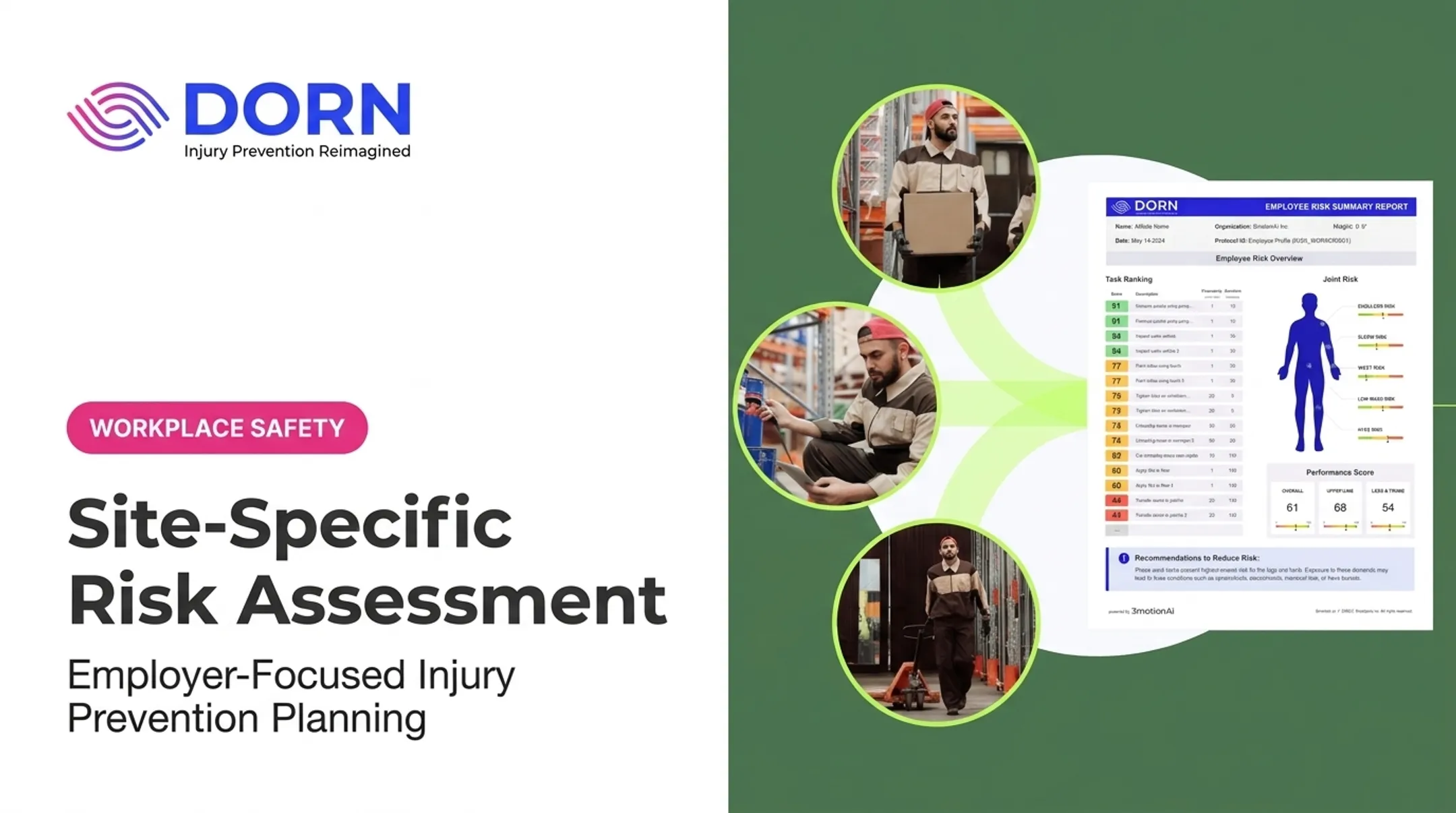
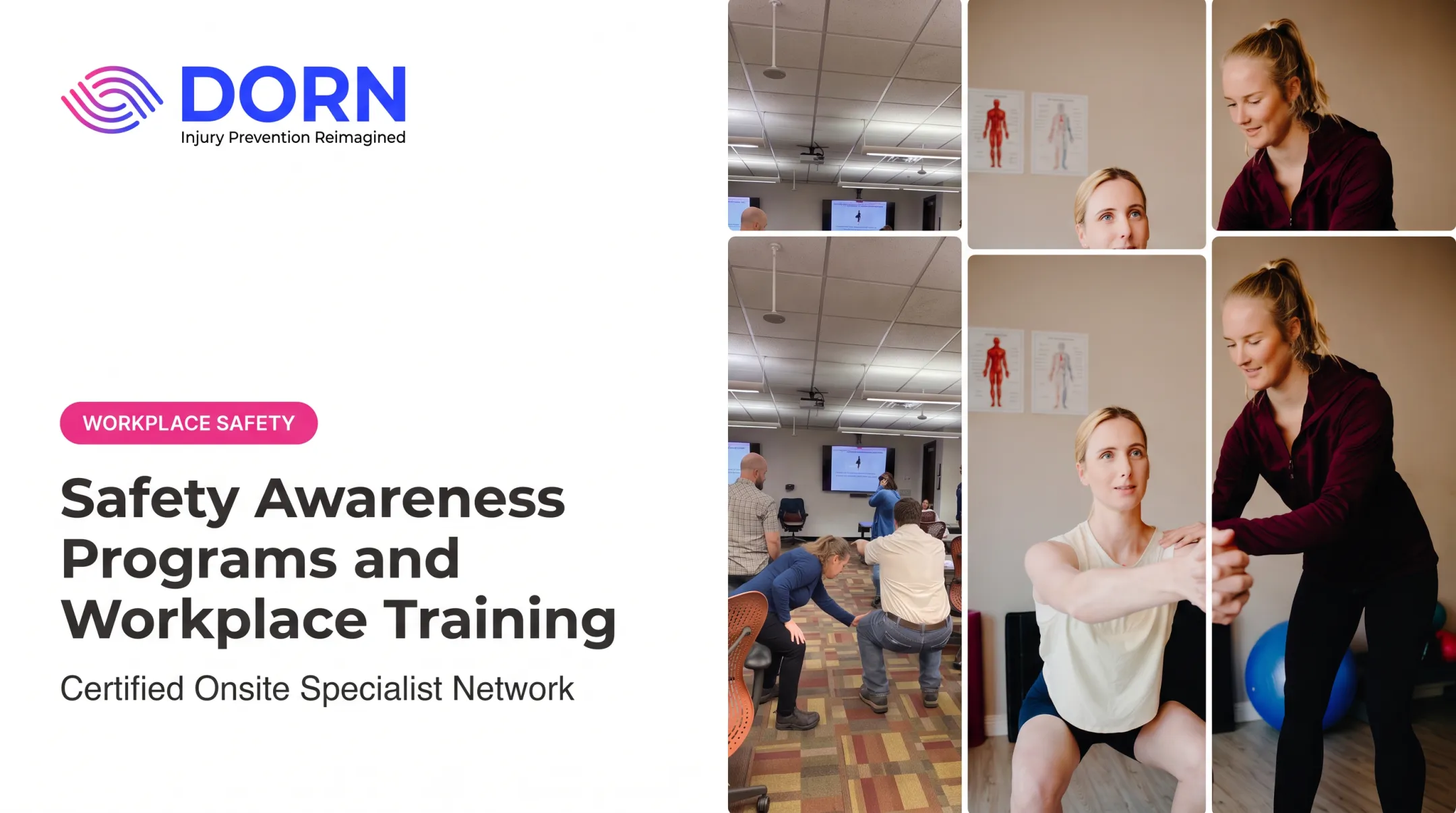
Employers managing recurring musculoskeletal risk sometimes bring in outside support to handle this systematically. DORN Companies, for example, works with construction and industrial employers on customized ergonomic assessments, onsite injury-prevention specialists, and movement training designed around the actual job tasks rather than generic advice. Any provider should be evaluated against a site's specific hazards, workforce, and existing safety program, not adopted as a blanket fix.
Heat and fatigue planning should follow current NIOSH guidance rather than a fixed schedule copied from another site. NIOSH recommends gradual acclimatization over 7 to 14 days, with new workers starting at a reduced percentage of typical heat-exposure duration and increasing gradually. Hydration, shaded recovery areas, and a buddy system all support this.
Wellness programs help, but they don't replace hazard elimination, engineering controls, required training, or regulatory compliance. They're a layer, not a substitute.
Training, Emergency Readiness, and Continuous Improvement
Orientation training only covers day one. Task-specific training needs to happen for every employee, supervisor, operator, and subcontractor, with refreshers whenever procedures, equipment, or responsibilities change.
An emergency action plan should cover:
- Site address and access points for responders
- Emergency contacts and first aid responsibilities
- Evacuation routes and muster points
- Severe-weather and fire response procedures
- Spill response steps
- Communication protocols with emergency responders
Inspections need an owner, a deadline, and verification after correction - not a checklist that gets filed and forgotten. Routine walkthroughs differ from specialized inspections required for cranes, excavations, or scaffolding, and both have their place.
Toolbox talks work best when they reflect what's actually happening on site that week, not a recycled generic topic. The same goes for shift handoffs. Incident and near-miss reporting should function as a learning system: preserve the facts, identify contributing causes, skip the blame, and share the corrective action across crews.

Leading indicators worth tracking include completed JSAs, inspection closure rates, training completion, and worker participation in hazard reporting. There's no universal benchmark number here - OSHA's own guidance treats leading indicators as proactive measures tailored to each site, not a fixed target to hit.
Common Safety Mistakes to Avoid
Even well-intentioned crews fall into predictable traps. Watch for these:
- Copying a generic JSA instead of walking the actual work area - this misses changing conditions, simultaneous operations, and hazards unique to that day's task.
- Treating PPE as the primary fix while skipping elimination, substitution, guarding, or ventilation that would prevent exposure first.
- Letting schedule pressure override procedure - bypassing exclusion zones, running uninspected equipment, or continuing after a control fails because "it's almost done."
- Failing to coordinate subcontractors, leaving permits, inspections, utility locates, or emergency response responsibilities unclear between trades.
- Ignoring early warning signs such as ergonomic symptoms, fatigue, heat stress indicators, or near misses because no injury has happened yet.
- Assuming one rule fits every project - OSHA requirements, state plans, and local codes vary, and none replace a site-specific risk assessment or a competent person's judgment.
Fall Protection has ranked as the most cited OSHA standard in recent federal enforcement data, with over 7,700 violations in a single reporting period. Most citations tie to the mistakes above: skipped assessments, missing guardrails, or PPE used instead of a higher-level control.
Conclusion
Construction safety comes down to a repeatable discipline: identify hazards before exposure, apply controls in the right order, communicate expectations clearly, and check that those controls still hold as work changes. None of this works as a once-a-year exercise.
Make JSAs, inspections, toolbox talks, incident reporting, and emergency drills part of the daily rhythm of the site, not paperwork completed to satisfy an audit. A crew that practices this consistently catches problems before they become incidents.
Before the next task starts, walk it through with the crew. Identify the highest-consequence hazard, confirm who owns which control, and make it clear that stopping work is always the right call when conditions aren't safe.
Frequently Asked Questions
What are the 5 steps of a job safety analysis (JSA)?
Select the job, break it into sequential steps, identify hazards at each step, determine controls, and communicate the completed analysis with the crew before work begins. Match terminology to your organization's written JSA or JHA procedure.
What are the 5 basic job site safety rules?
Assess hazards before work starts, wear required PPE, and use only trained personnel and inspected equipment. Keep housekeeping and situational awareness tight, and report or correct hazards immediately.
What is a job site hazard?
A hazard is any condition, activity, material, or energy source with the potential to cause injury, illness, or property damage. Examples include an unguarded floor opening, an energized circuit, or unstable trench walls.
What is the most important safety tool on any job site?
A site-specific job safety analysis, backed by clear crew communication and real controls, is one of the most important planning tools on any job site.
How often should construction site safety inspections be conducted?
Frequency depends on the site, task, equipment, and applicable rules. At minimum, inspect before work starts, during changing conditions, after any incident, and at required intervals such as daily trench checks.
Who is responsible for construction job site safety?
Employers and site leadership must provide a safe system, training, and resources. Supervisors, workers, subcontractors, and visitors all share responsibility for following procedures and using stop-work authority when needed.