
Introduction
Most workplace injuries don't happen because a hazard was impossible to see. They happen because no one noticed it in time, or no one acted on what they noticed. Private industry still reports roughly 2.6 million nonfatal injuries and illnesses a year, many tied to hazards that were visible but ignored. Hazard recognition training closes that gap.
OSHA describes hazard identification as a proactive, ongoing process, not a one-time checklist. Skip that step, and even well-designed safety programs fail before controls can work.
Hazard recognition means spotting a condition, task, or behavior that could cause harm. Risk assessment goes further: it evaluates how likely that harm is, how severe it could be, and whether current controls actually work.
This guide covers common hazards and how to spot them, a repeatable risk assessment process, the hierarchy of controls, and what makes hazard recognition training stick in real US workplaces.
Key Takeaways
- Hazard recognition works best when employees, supervisors, and EHS staff all participate, not just the safety department.
- Risk assessments should weigh severity, likelihood, exposure, and control effectiveness together, not in isolation.
- The hierarchy of controls favors fixing hazards at the source over relying on training or PPE alone.
- Reassess whenever equipment, staffing, materials, or processes change, or after an incident.
What Hazard Recognition and Risk Assessment Mean
A hazard is the potential for harm, according to OSHA's Job Hazard Analysis guide. A frayed extension cord, a wet floor, an awkward lifting motion, or a rushed procedure all qualify. Risk is different: it's the likelihood that the hazard actually causes harm, combined with how bad that harm could be.
Here's a simple example. A spilled liquid on a warehouse floor is a hazard whether one person walks past it or fifty do. But the risk changes dramatically based on foot traffic, lighting, whether workers are carrying loads, and how fast someone cleans it up. Same hazard, different risk levels.
Hazard recognition is the act of noticing that spill exists. Risk assessment is deciding how urgently it needs to be addressed and what controls make sense.
Proactive vs. Reactive Approaches
Proactive work includes routine inspections, task observations, Job Hazard Analyses (JHAs), and employee reporting before anything goes wrong. Reactive work investigates incidents, injuries, and near misses after the fact to find root causes.
Both matter. But organizations that rely only on reactive learning are waiting for something bad to happen first.
Training should also cover hazards that aren't obvious at a glance:
- Ergonomic strain and fatigue
- Poor workstation design
- Unclear procedures and production pressure
- Communication gaps between shifts
These contribute to injuries just as often as a missing machine guard. They're just harder to see.
Common Workplace Hazards and Recognition Methods
Hazards fall into recognizable categories, though the mix varies by industry.
| Category | Examples |
|---|---|
| Slips, trips, falls | Wet floors, poor housekeeping, uneven surfaces, unguarded ledges |
| Struck-by / caught-in | Falling objects, moving equipment, pinch points |
| Machinery & electrical | Missing guards, exposed conductors, incorrect grounding |
| Chemical & biological | Inhalation risks, corrosives, flammables, contamination |
| Fire & environmental | Heat sources, poor ventilation, weather exposure |
| Ergonomic | Repetitive motion, awkward posture, forceful exertion |
| Human factors | Fatigue, distraction, understaffing, poor lighting |
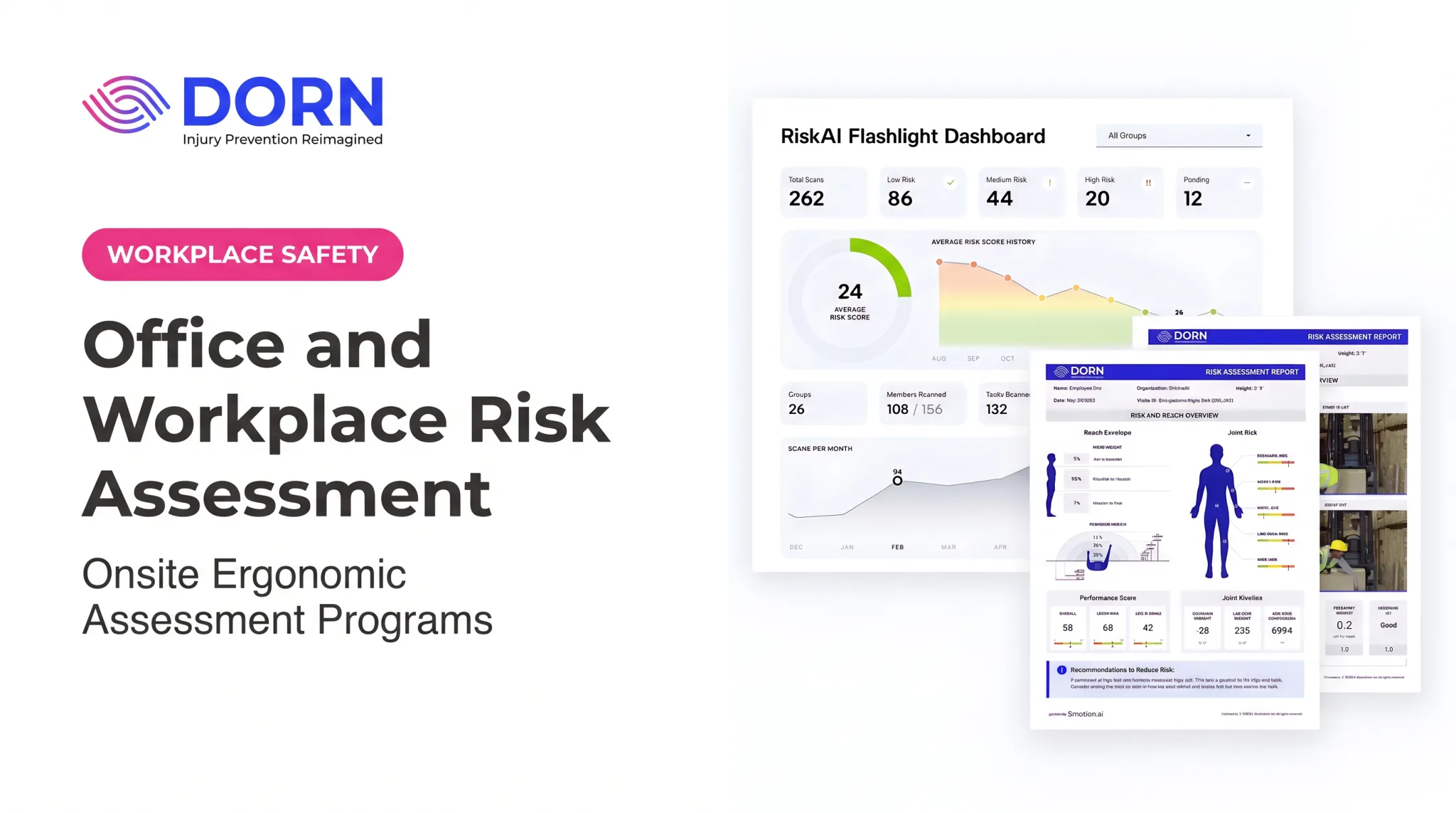
A manufacturing plant deals heavily with machinery and struck-by risks. A distribution center sees more manual handling and ergonomic strain. Office and remote settings shift toward workstation design and screen-related fatigue. Training that ignores these differences tends to feel generic and gets tuned out.
Recognition Methods That Actually Work
- Scheduled inspections and safety walkthroughs
- Task observations while work is actually happening
- Employee interviews and pre-task reviews
- Job Hazard Analysis for high-risk or complex tasks
- Near-miss reporting and incident root-cause analysis
Checklists help, but a checklist-only approach misses context. Stronger recognition habits include:
- Involve the workers who perform the task
- Document conditions specifically rather than checking a box
- Revisit tasks during startup, shutdown, and maintenance when routines change
Spotting Ergonomic Hazards
Ergonomic risk factors include:
- Force, repetition, and duration
- Awkward posture and vibration
- Workstation layout and manual handling
- Inadequate recovery time between tasks
Low back pain alone costs US employers over $100 billion annually. Workplace fatigue adds roughly $136 billion in lost productivity each year, or about $1,200 to $3,100 per employee.
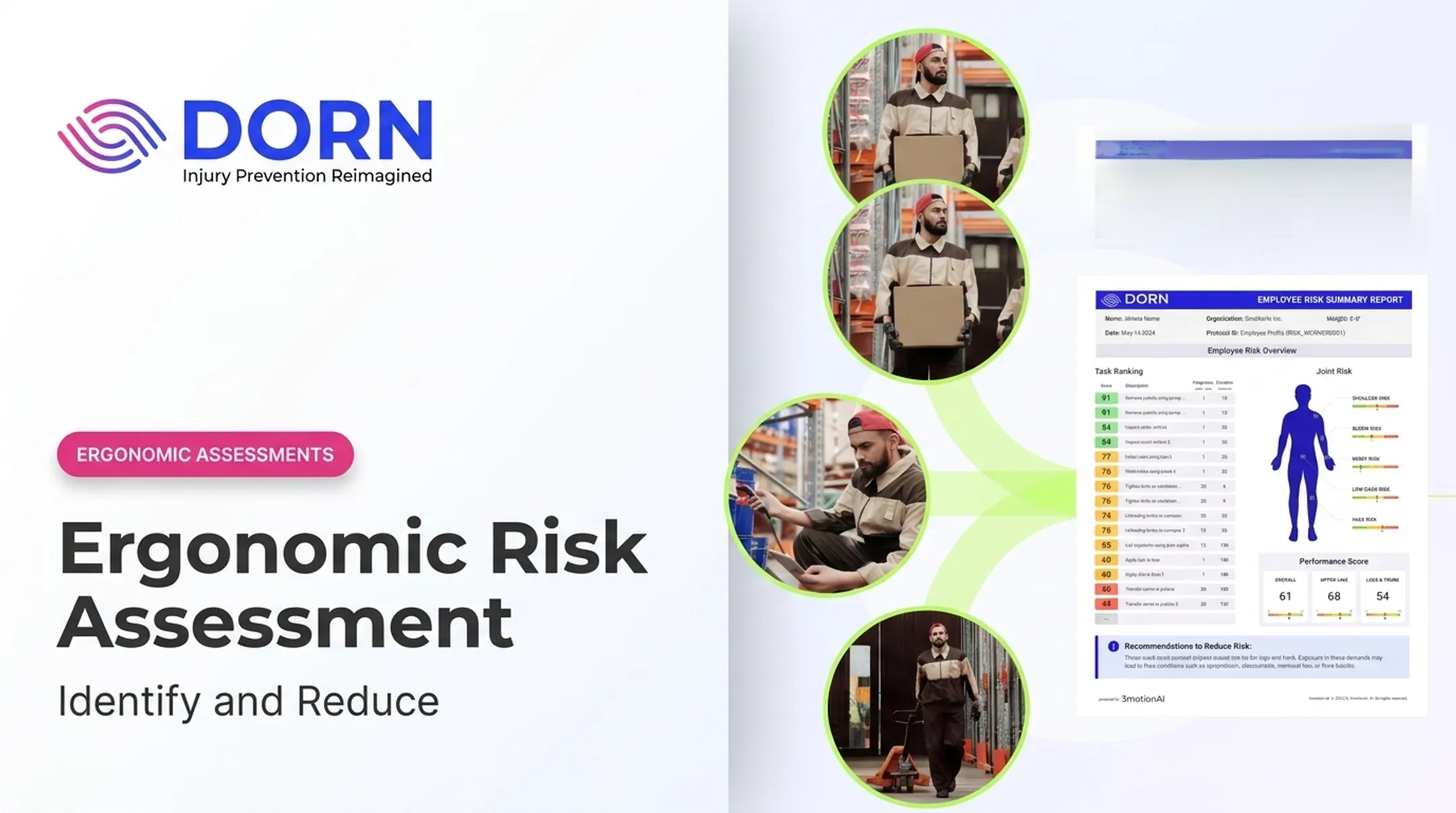
DORN's approach looks at these hazards through a Body, Behavior, and Environment lens: physical demands on the worker, the habits and techniques they use, and the workstation or environment shaping both. Observing all three together tends to surface risks that a single-factor checklist would miss.
How to Conduct a Workplace Risk Assessment
A risk assessment doesn't need to be complicated, but it does need to be consistent. Here's a repeatable workflow:
- Define the scope — the job, task, equipment, materials, workers, and operating conditions under review.
- Identify hazards during normal operations, plus startup, shutdown, maintenance, cleaning, changeovers, and non-routine work.
- Evaluate each hazard by asking who could be exposed, how exposure happens, potential severity, likelihood, and whether current controls are adequate.
- Rate the risk using a qualitative category system or a probability-severity matrix.
- Prioritize action based on greatest potential harm and exposure, factoring in vulnerable or inexperienced workers.
- Document and assign ownership, then set a review date.
Whatever rating tool you choose, consistency matters more than complexity. A numerical score is useful for comparison, but it should never override professional judgment when something feels off.

What to Document
A solid risk assessment record includes:
- The hazard and affected task or group
- Existing controls in place
- Risk rationale (why this priority level)
- Recommended action and responsible owner
- Target completion date
- Verification method and review date
When to Reassess
Revisit an assessment after any of the following:
- An incident, injury, or near miss
- Process, equipment, or material changes
- Layout or staffing changes
- Recurring complaints about a task
- Evidence that existing controls aren't working
Skipping this step is how outdated assessments become useless documents nobody trusts.
Turning Assessment Findings Into Effective Controls
Once a hazard is rated, the next question is what to do about it. OSHA's hierarchy of controls ranks options from most to least reliable:
| Level | Control | Example |
|---|---|---|
| 1 | Elimination | Remove the hazard entirely |
| 2 | Substitution | Replace with a lower-risk alternative |
| 3 | Engineering controls | Redesign the task or isolate the hazard |
| 4 | Administrative controls | Change procedures, schedules, signage |
| 5 | PPE | Protective gear as a last line of defense |
Take a repetitive packing station as an example. The team might redesign the workstation height (engineering), rotate workers through the task (administrative), and provide anti-fatigue mats or gloves (PPE). Layering several controls usually works better than relying on one alone.
Training doesn't replace redesigning a hazard. Administrative controls and PPE only work if workers use them consistently, supervisors reinforce them, and equipment fits and functions correctly. A perfectly written procedure means little if the workstation still rewards shortcuts.
Workers should help select controls. They understand production pressure, discomfort, and workarounds that a control plan might unintentionally create. Skipping their input often means the control gets ignored within weeks.
Verify It Actually Worked
After implementation:
- Confirm the control was installed or adopted as intended
- Check whether exposure or unsafe conditions actually dropped
- Gather worker feedback on usability
- Update the assessment if the control underperforms
For industry-specific requirements, check current OSHA standards directly, such as machine guarding under 29 CFR 1910.212 or lockout/tagout under 1910.147. General guidance does not always apply universally.
Building an Effective Hazard Recognition Training Program
An effective program goes beyond hazard categories. Build it around skills workers use on the floor:
- Hazards specific to the job and facility
- Observation and reporting skills
- Basic risk evaluation
- The hierarchy of controls
- Emergency response and near-miss reporting
- Ergonomic awareness
- The worker's authority to stop and escalate unsafe work
Generic slide decks rarely land. Training built around site-specific photos, actual equipment, and real near-miss examples sticks far better than abstract scenarios.
Matching Delivery to the Workforce
Different formats suit different needs:
- Classroom / instructor-led for hands-on skills and demonstrations
- E-learning and microlearning for distributed or multilingual workforces
- Toolbox talks for quick, recurring reinforcement
- Blended formats when hands-on practice matters but scheduling is tight
Choose based on workforce size, language needs, shift patterns, and how physical the work is.
Culture Determines Whether Reporting Happens
Workers won't report hazards if they expect blame or silence. Building trust means:
- Offering accessible, non-punitive reporting channels
- Responding promptly and closing the feedback loop
- Recognizing workers who flag hazards early
Supervisors carry more weight here than any outside expert, simply because they're present every shift. Pre-shift talks, field coaching, and consistent follow-through on corrective actions keep training relevant long after the initial session ends.
Those same habits also show whether the program is working. Track effectiveness with:
- Knowledge checks after training
- Observed task performance on the job
- Quality of hazard reports submitted
- Speed of completed corrective actions
When Organizations Need Additional Safety Support
Internal safety teams handle most day-to-day recognition work. But some situations call for outside expertise:
- Recurring musculoskeletal injuries that internal fixes haven't resolved
- Complex or multi-site operations stretching EHS capacity thin
- New equipment or facility design requiring specialized evaluation
- Corrective actions that haven't reduced exposure despite repeated attempts
Nearly one-third of workplace injuries trace back to ergonomic causes. That is often where outside specialists help teams spot hidden exposure and close gaps faster.
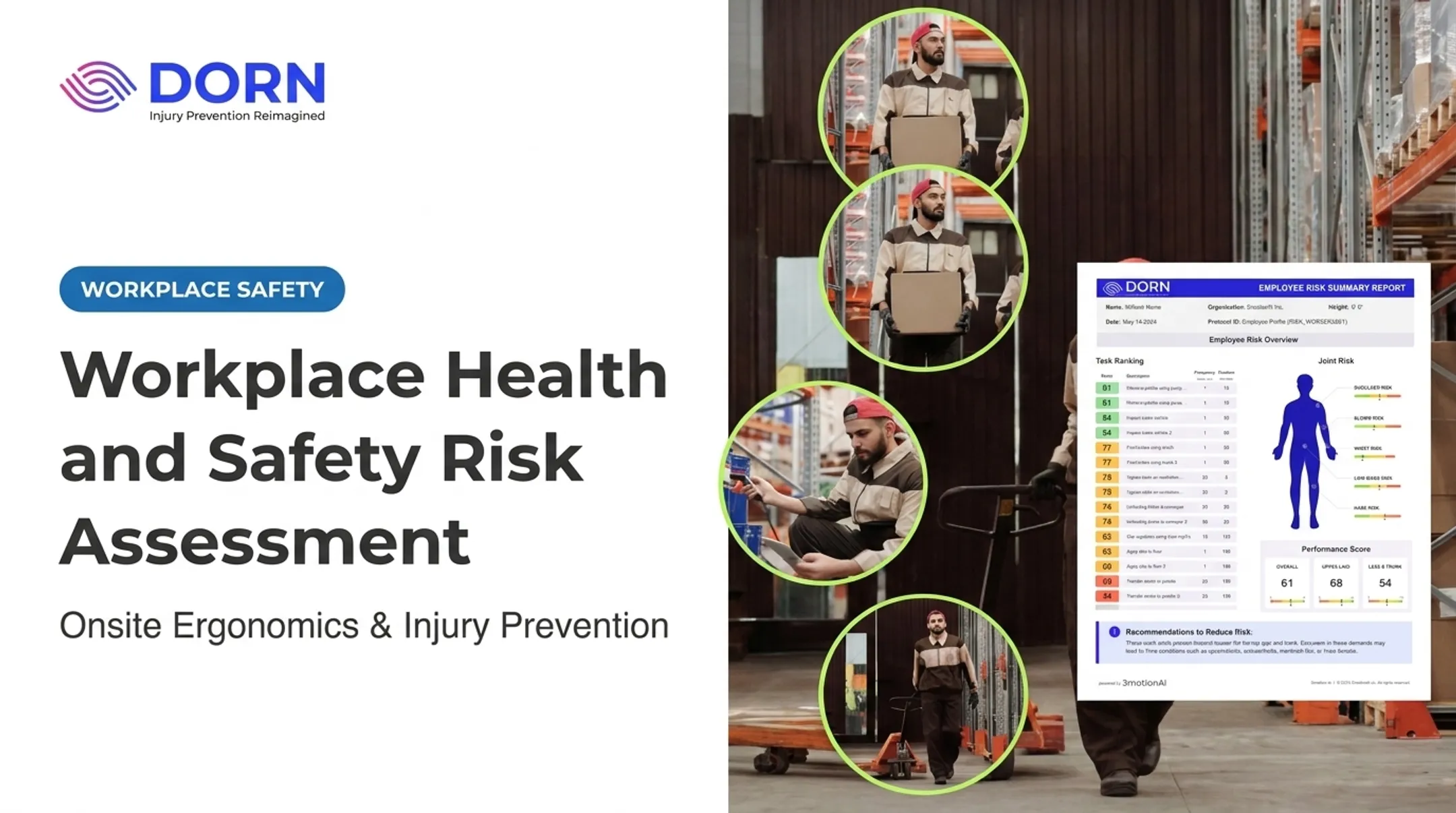
Outside support is most useful when you need deeper hazard recognition, task-level risk assessment, or coaching your internal team cannot staff. Typical help includes ergonomic assessments, job and task analysis, onsite or virtual coaching, and technology-enabled observation.
DORN Companies, for example, has nearly 25 years in workplace safety and injury prevention, with over 100 providers across 60+ locations nationwide. The team pairs AI-based motion capture with hands-on coaching for manufacturing, warehousing, and food and beverage employers.

A Quick Decision Checklist
Before choosing a provider, confirm they offer:
- Relevant industry experience
- Qualified, credentialed personnel
- A process that involves frontline workers directly
- Clear deliverables and implementation support
- A measurement plan to track results
- Compatibility with your existing EHS systems
Frequently Asked Questions
What are the common methods for hazard recognition?
Common methods include scheduled inspections, walkthroughs, task observations, Job Hazard Analyses, employee reporting, exposure monitoring, and incident or near-miss investigations. Combining several methods works better than relying on just one.
Where can I find hazard recognition training or courses on hazard identification and risk assessment?
Start with employer-provided training, then look to reputable safety organizations, qualified EHS providers, and current OSHA resources. The right course depends on your role, workplace, and any applicable regulatory requirements.
What are the common types of workplace hazards?
Common categories include physical, chemical, biological, ergonomic, electrical, mechanical, environmental, and human-factor hazards. The specific mix depends heavily on your industry and facility type.
What are the steps for hazard recognition and control?
The process runs through recognition, risk evaluation, control selection using the hierarchy of controls, implementation, verification, documentation, and periodic review. Skipping verification is the most common breakdown point.
What are the five levels of hazard control?
In order of general effectiveness: elimination, substitution, engineering controls, administrative controls, and PPE. Higher-level controls address hazards at the source rather than depending on human behavior.
What is hazard identification and risk assessment, and how do you conduct one?
It's the process of spotting hazards, determining who might be harmed, evaluating likelihood and severity, prioritizing actions, implementing controls, and reassessing over time. Consistency in method matters more than the specific tool you choose.