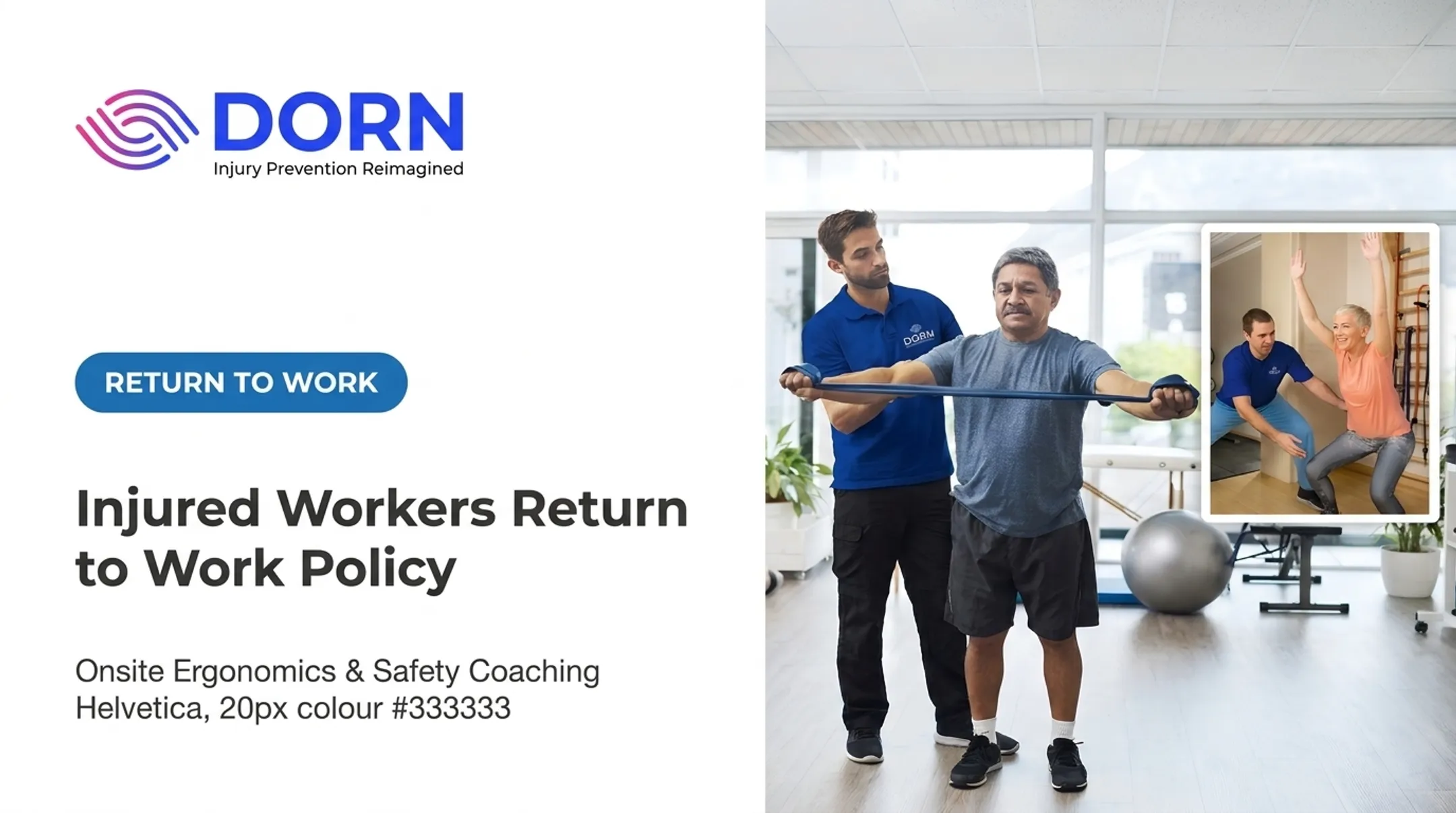
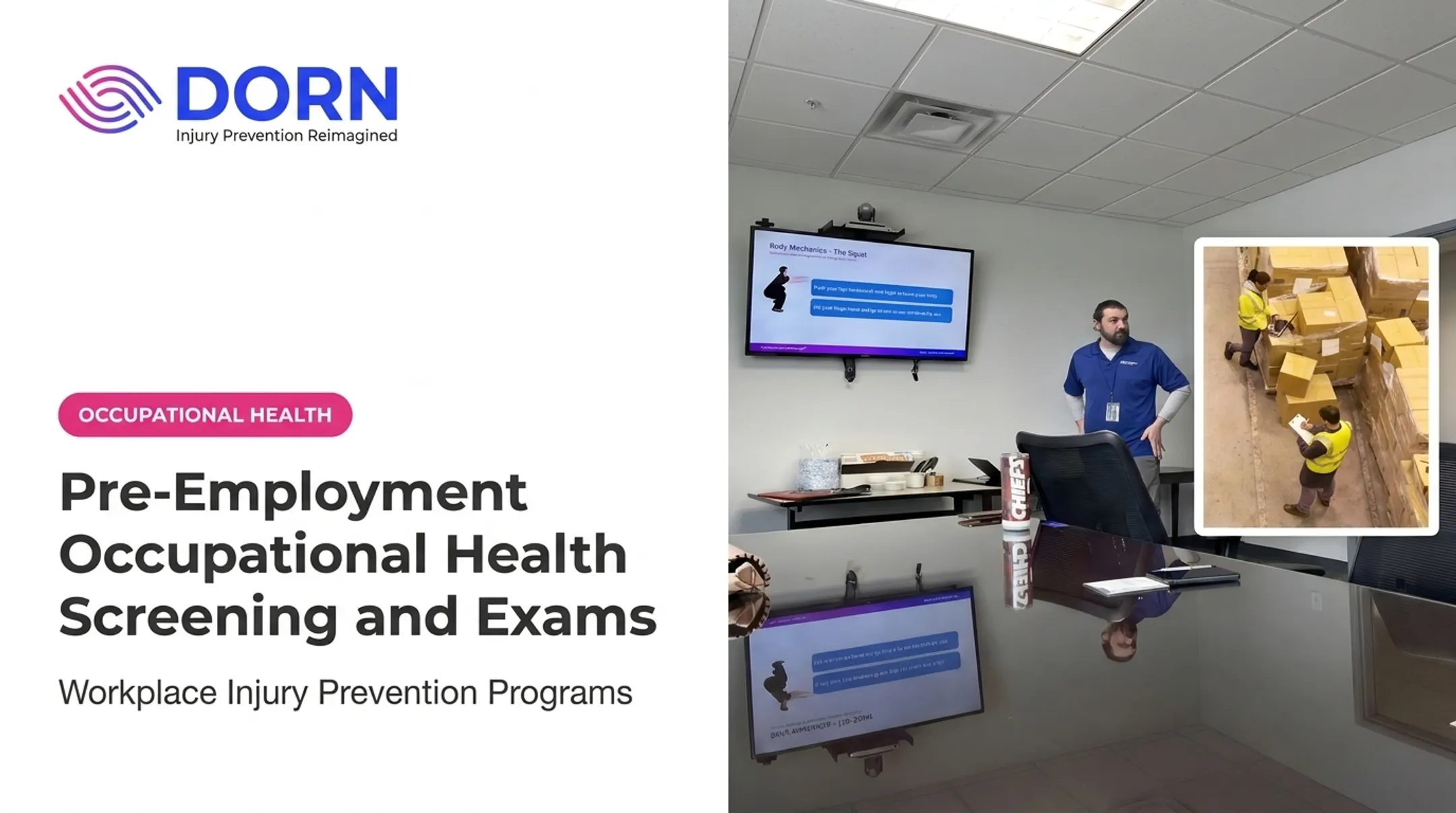
That's where occupational health return-to-work assessments come in. These are job-specific evaluations that connect a worker's current functional abilities with actual workplace demands, supporting the employee, the employer, and the safety team at the same time.
This article walks through what happens during an assessment, what information gets considered, how findings translate into restrictions or accommodations, and how employers can build a return-to-work plan that actually holds up.
Key Takeaways
- Assessments measure work capacity against specific job duties, not just a diagnosis on paper.
- Outcomes range from unrestricted work to modified duties, phased schedules, or further evaluation.
- Accurate job descriptions, honest communication, and confidentiality drive safe outcomes.
- Occupational health guidance informs return-to-work decisions but doesn't replace individualized medical care or legal advice.
When Is a Return-to-Work Assessment Needed?
Employers typically request an assessment after:
- Workplace injury or occupational illness
- Non-work-related illness or surgery
- Musculoskeletal condition, such as a back or shoulder injury
- Mental health absence
- Chronic condition that has changed in severity
- Extended leave where job demands may exceed current capacity
Assessments matter most for physically demanding, hazardous, safety-sensitive, or highly repetitive roles. Sending someone back too early on a loading dock or a production line doesn't just risk reinjury for that employee. It can put coworkers and the public at risk too.
How This Differs from Other Evaluations
A return-to-work assessment isn't the same as:
- A pre-employment exam
- A routine physical
- A workers' compensation treatment visit
- A general fitness-for-duty screening
Terms often get used loosely, and processes can overlap.
DORN's Post-Offer Employment Testing (POET), for example, evaluates a new hire's physical aptitude for a role before they start. A return-to-work assessment happens after an absence, for an existing employee, and asks a narrower question: is this person's current capacity a match for this job, today?
The EEOC's guidance on disability-related inquiries draws a similar line: examinations of existing employees must be job-related and consistent with business necessity, not part of a blanket screening program.
There's no universal timeline for referral. It should follow the employee's recovery, the demands of the job, and any applicable employer or regulatory process, not a fixed 30- or 60-day rule.
What Information and Working Conditions Are Considered?
A solid assessment rests on three connected pieces: worker capacity, workplace risk, and essential job functions. The evaluator's job is linking clinical findings to what the role actually requires, not treating a diagnosis as a stand-in for ability.
Relevant health and functional information can include:
- Movement, strength, stamina, and balance
- Concentration and communication ability
- Medication effects that could affect safety or alertness
- Stress tolerance and capacity for safety-critical tasks
Just as important is what stays out: irrelevant personal medical history, and any assumption that a diagnosis label means someone can't do the job.
Physical, Environmental, and Cognitive Demands
| Category | Examples |
|---|---|
| Physical | Lifting, carrying, pushing, pulling, reaching, climbing, bending, kneeling, standing, sitting, walking, forceful gripping, vibration exposure, repetitive motion, required work pace |
| Environmental/Organizational | Temperature extremes, noise, lighting, airborne exposures, equipment used, shift length, scheduling, breaks, staffing levels, production demands, travel, task rotation options |
| Cognitive/Interpersonal | Sustained attention, decision-making under pressure, emergency response, public contact, responsibility for others' safety |
Employers play a role here too. A job title alone doesn't tell an evaluator much.
Providing an accurate job description, a task analysis, workstation photos or video, and details from a representative workday all sharpen the accuracy of the recommendation. DORN's Phase 1 (Workforce Planning) and Phase 2 (Physical Environment Review) address this internally by clarifying the role, any reassigned responsibilities during an absence, and the physical layout the employee will return to.

What Happens During an Occupational Health Return-to-Work Assessment?
Referral and Consent
The process usually starts with the employer explaining the reason for referral, supplying job information, and identifying the specific work-related questions that need answers. Consent and communication happen upfront.
The Employee Interview
Next comes a conversation covering:
- History of the condition and current symptoms
- Treatment and recovery status
- Activities that remain difficult
- Concerns about resuming specific tasks
This part matters more than it sounds. An honest description of what's still hard beats a vague "I'm fine."
Clinical and Functional Review
Depending on the job and condition, the evaluator may check movement, strength, range of motion, balance, endurance, or cognitive function. Some cases call for more, such as a functional capacity evaluation, task simulation, or a conversation with the treating provider.
Any additional testing should tie back to the actual work question, not run as a generic battery. DORN's JAS and Kinetisense platform, for example, delivers kinetic-chain analysis and functional capacity data for return-to-work job matching. Work hardening sessions can also simulate real job tasks to rebuild endurance safely.
The Report
The evaluator compares findings against essential job functions and workplace risks. Typical outcomes fall into a few buckets:
- Fit for regular duty — no restrictions
- Fit with temporary or permanent restrictions
- Fit with accommodations or a phased schedule
- Not currently fit for duty, pending further recovery or information
What the employer generally needs is the capacity level, restrictions, expected review timing, and recommended adjustments. Not a diagnosis. Not unrelated medical details.

Preparing for the Assessment
For employees, it helps to bring:
- Referral paperwork and job information
- Relevant treatment or restriction notes
- Medication details, if work-relevant
- Questions about specific duties
- An honest account of tasks that remain difficult
Minimizing symptoms to seem "ready," or pushing through pain to demonstrate capacity, tends to backfire. Rushing back into more than an employee can safely sustain often leads straight to reinjury.
For employers and HR teams, preparation means providing:
- The complete job description and essential-function list
- Physical and cognitive demand details
- Shift information and known hazards
- Current restrictions and available modified-duty roles
Avoid steering the employee toward a predetermined outcome. The point of the assessment is objective guidance tied to job functions, not a rubber stamp.
Quick checklist:
- Appointment logistics confirmed
- Consent forms completed
- Workers' comp or benefit authorization in place
- Interpreter or accessibility needs communicated
- Process for sharing final recommendations agreed upon
The assessment doesn't replace ongoing treatment. Employees should keep following their treating clinician's instructions throughout.
How Employers Use the Findings to Build a Safe Return-to-Work Plan
A report is only useful if it turns into specific, workable controls. That might mean:
- Lifting limits or reduced repetition
- Task rotation or additional breaks
- Adjusted start times or shorter shifts
- Modified equipment or temporary reassignment
- Remote work where feasible
- Gradual increases in duties over time
A phased return-to-work plan should spell out defined duties, hours, restrictions, a responsible contact, review dates, and clear criteria for progressing or pausing the plan. Accommodations need to stay practical, documented, communicated to supervisors, and reviewed regularly, since both functional ability and job conditions shift over time.

Those controls only hold if the right people stay aligned. HR, supervisors, safety/EHS staff, the employee, treating providers, occupational health professionals, and workers' comp stakeholders need shared expectations while medical details stay confidential.
Workplace rehabilitation, ergonomics, and injury-prevention support can complement a formal occupational health assessment. DORN's approach looks at Body, Behavior, and Environment together: the worker's physical condition, how tasks get performed, and the workstation itself. That combination targets factors that raise reinjury risk after a return.
Medical clearance and specific restrictions remain with the treating provider and the employer's own process. DORN's role sits alongside that work, not in place of it.
Monitoring shouldn't stop once the plan starts. Watch for:
- Pain or symptom escalation
- Fatigue
- Difficulty completing assigned tasks
- Near misses
- Supervisor observations
Roughly 32% of employers have reported injuries or near misses tied to worker fatigue, so fatigue tracking during a phased return deserves the same attention as lifting limits or hour caps.
Coordinated return-to-work programs also show measurable results. A study published in Medical Care followed Washington state workers with musculoskeletal injuries treated through a coordinated care program between 2004 and 2007. Over eight years, that group averaged 49.5 disability days, compared with 75.8 days for a comparison group, and adjusted odds of long-term work disability of 0.70.
The study wasn't randomized, so it shows a program association rather than proof that any single assessment caused the improvement. Even so, the gap is large enough that employers should treat coordination and early engagement as core parts of the return window, not optional extras.
Legal, Privacy, and Program Considerations for US Employers
Under EEOC guidance, disability-related inquiries and medical examinations of current employees must be job-related and consistent with business necessity. State laws, workers' comp rules, and sector-specific requirements can layer on top of that federal standard, so it's rarely just one rulebook.
Key principles for employers:
- Employers should receive only the work-related conclusions and restrictions needed to manage the job, not full medical records.
- Medical information must stay confidential, filed separately from ordinary personnel records.
- Assessments should be individualized, based on essential functions and documented risk, not assumptions tied to a condition, age, or perceived reliability.
When disagreement, complex accommodations, safety-sensitive duties, or disputed restrictions arise, bring in qualified HR, occupational health, safety, workers' comp, and legal professionals early. That coordination usually prevents larger problems later.
This article provides general educational information. It does not establish a medical determination, employment decision, or legal requirement for any specific workplace.
Frequently Asked Questions
What happens at an occupational health return-to-work assessment?
The employer refers the employee and shares job details. The evaluator reviews condition, functional status, and clinical findings, then compares them with job demands. The result is a recommendation for full duty, restrictions, accommodations, or a phased return.
Can an employer ask about my medical symptoms during a return-to-work assessment?
Questions should stay limited to your ability to perform essential job functions and to workplace safety. Unnecessary diagnostic details should stay confidential under the ADA and applicable medical-privacy rules.
What are examples of working conditions considered in the assessment?
Assessments typically weigh physical demands (lifting, posture, repetitive motion, equipment use), schedule and pace, environmental factors (temperature, noise), and cognitive needs such as sustained concentration—matched to the specific job.
What's the difference between a return-to-work assessment and a functional capacity evaluation?
A return-to-work assessment draws on multiple sources to judge overall work readiness. A functional capacity evaluation is a structured, hands-on test of physical or cognitive abilities against specific job demands, and it is sometimes one input to the broader assessment.
What are the possible outcomes of a return-to-work assessment?
Outcomes include unrestricted duty, temporary or permanent restrictions, reasonable accommodations, a staged return, a request for more information or testing, or a temporary finding that the employee isn't ready to return yet.