Introduction
Workplace safety culture isn't a binder on a shelf. It shows up in whether a supervisor stops the line for a loose guard rail, whether a new hire feels comfortable flagging a slippery floor, and whether "quick fixes" ever make it back onto the maintenance schedule.
Many organizations struggle with the same recurring issues:
- Hazards go unreported because workers fear blame or don't trust the process
- Production deadlines quietly override safety stops
- Musculoskeletal injuries keep resurfacing in the same job tasks
- Supervisors apply safety rules inconsistently from shift to shift
A 2023 systematic review of US studies found that worker underreporting of injuries and illnesses ranges from 20% to 91%, driven largely by fear and distrust of consequences. This article breaks down what a strong safety culture actually looks like and gives you a practical framework to build, measure, and sustain one.
Key Takeaways
- Leadership behavior, employee participation, psychological safety, and proactive hazard control form the backbone of safety culture.
- Embed safety in job design, onboarding, daily huddles, and performance conversations, not just annual training.
- Track leading indicators (hazard reports, training completion) to predict problems; use lagging indicators (injuries, lost time) to confirm them.
- Flex improvement plans for manufacturing floors, warehouses, food processing lines, and remote or multi-site teams.
What Is Workplace Safety Culture and Why Does It Matter?
Workplace safety culture is the shared set of values, beliefs, and behaviors that shape how an organization spots and responds to risk. It's the difference between a written rule and what people actually do when no one's watching.
Culture, Climate, and Compliance Aren't the Same Thing
Safety culture is the broad, long-term pattern of organizational values and actions. Safety climate is narrower, reflecting how employees perceive safety conditions at a given moment. A written safety program or OSHA compliance checklist is narrower still.
OSHA's Recommended Practices frame safety management as a proactive cycle: leadership, worker participation, hazard identification, hazard control, training, and evaluation. Policies alone don't create safe behavior. Culture does.
The Real Cost of Getting It Wrong
Musculoskeletal disorders (MSDs) are the clearest example of what happens when culture fails. Overexertion injuries alone cost US employers $12.84 billion in direct workers' compensation costs in 2023, according to Liberty Mutual's Workplace Safety Index. That is nearly 22% of the cost burden among the top 10 workplace injuries.
DORN's internal data points to a similar pattern: MSDs account for roughly 33% of workers' comp costs. OSHA figures cite about $20 billion in annual direct employer costs, with 600,000 employees losing work time each year.

Culture directly shapes whether these injuries get caught early:
- Workers who feel safe reporting pain or discomfort trigger earlier intervention
- Early symptom reporting programs have been linked to MSD rate reductions of 40% to 70%
- Improved workplace design can prevent up to 30% of back injuries that might otherwise lead to surgery
A Whole-Person View: Body, Behavior, Environment
A strong safety culture treats injury prevention as an interaction between three factors: Body (physical demands, fatigue, individual health), Behavior (habits, training, supervision), and Environment (equipment, workflow, workstation design). Miss any one of the three, and hazards keep resurfacing regardless of how many posters go up in the break room.
What Are the Key Characteristics of a Strong Safety Culture?
Strong safety cultures share recognizable traits. Here's what separates them from organizations that just have a safety policy on paper.
Visible Leadership Commitment
Leaders and supervisors follow the same rules as everyone on the floor. They stop unsafe work when needed, allocate real budget to fixes, and bring up safety in the same breath as quality and output. That consistency is a daily habit, not a poster campaign.
Employee Involvement and Psychological Safety
Workers need real channels to speak up, and real assurance nothing bad happens when they do. This includes:
- Safety committees and frontline consultations on job hazard analyses
- Near-miss reporting and stop-work authority
- A say in corrective-action decisions
Dr. Steven Simon's psychological-safety framework, cited in DORN's research, notes that workers must be able to report hazards, discomfort, and errors without fear of reprisal.
Irving Jacob's research on organizational silence identifies fear, information-hiding, and bias as the main reasons people stay quiet instead of raising concerns. Accountability for unsafe behavior is not the same as punishment for reporting it. Mixing the two guarantees underreporting.
Clear Expectations and Proactive Prevention
Strong cultures make expectations workable on the floor:
- Role-specific procedures, with multilingual or visual instructions where needed
- Consistent onboarding so new hires start from the same standard
- Incident investigations treated as learning exercises, not blame exercises
- Corrective actions completed after equipment, staffing, or process changes
The Four C's of Safety Culture
The UK Health and Safety Executive's "Organising for Safety" guidance defines four pillars organizations can use to check their own practices:
| Pillar | What It Means |
|---|---|
| Control | Leadership takes overall responsibility and assigns clear duties |
| Communication | Safety information and changes travel quickly through the organization |
| Co-operation | Employees take reasonable care; committees formalize participation |
| Competence | Workers have the training and instruction to do the job safely |
This framework works alongside leadership commitment and employee engagement. It does not replace them.
How to Improve Workplace Safety Culture
Improving culture isn't a single initiative. It's a sequence of deliberate moves.
Start With a Baseline Assessment
Before changing anything, review:
- Incident and near-miss trends, plus workers' comp claim themes
- Absenteeism and ergonomic complaint patterns
- Training completion rates and corrective-action backlogs
- Employee survey feedback and direct observation of actual work practices
Prioritize fixes based on severity and frequency, not just what's easiest to solve.
Build Leadership Ownership Into Daily Operations
Safety needs a seat at the table where production decisions happen. That means:
- Assign clear safety responsibilities to specific leaders, not "everyone"
- Include safety updates in production and team meetings, not a separate annual review
- Conduct visible walkthroughs and recognize hazard reports publicly
- Give supervisors the time and coaching skills to reinforce safety in the moment
Make Employee Participation Easy and Consequential
Multiple reporting channels help, but participation only sticks when people see results:
- Hold brief toolbox talks on real floor issues
- Involve workers directly in job-task reviews
- Close the loop by telling employees what action followed their concern
Strengthen Training and Apply the Hierarchy of Controls
Training should be role-specific and hands-on: hazard recognition, PPE use, safe material handling, and how to stop work or report a hazard. But training alone won't fix a bad workstation design.
NIOSH's Hierarchy of Controls ranks solutions from most to least effective:
- Elimination – remove the hazardous task entirely
- Substitution – swap in a safer process or material
- Engineering controls – redesign the workstation or add lifting equipment
- Administrative controls – adjust staffing, rotation, or workflow
- PPE – the last line of defense, not the first
A repetitive lifting task, for example, is better solved with a mechanical lift aid than with a reminder to "lift with your legs."
When to Bring in Outside Support
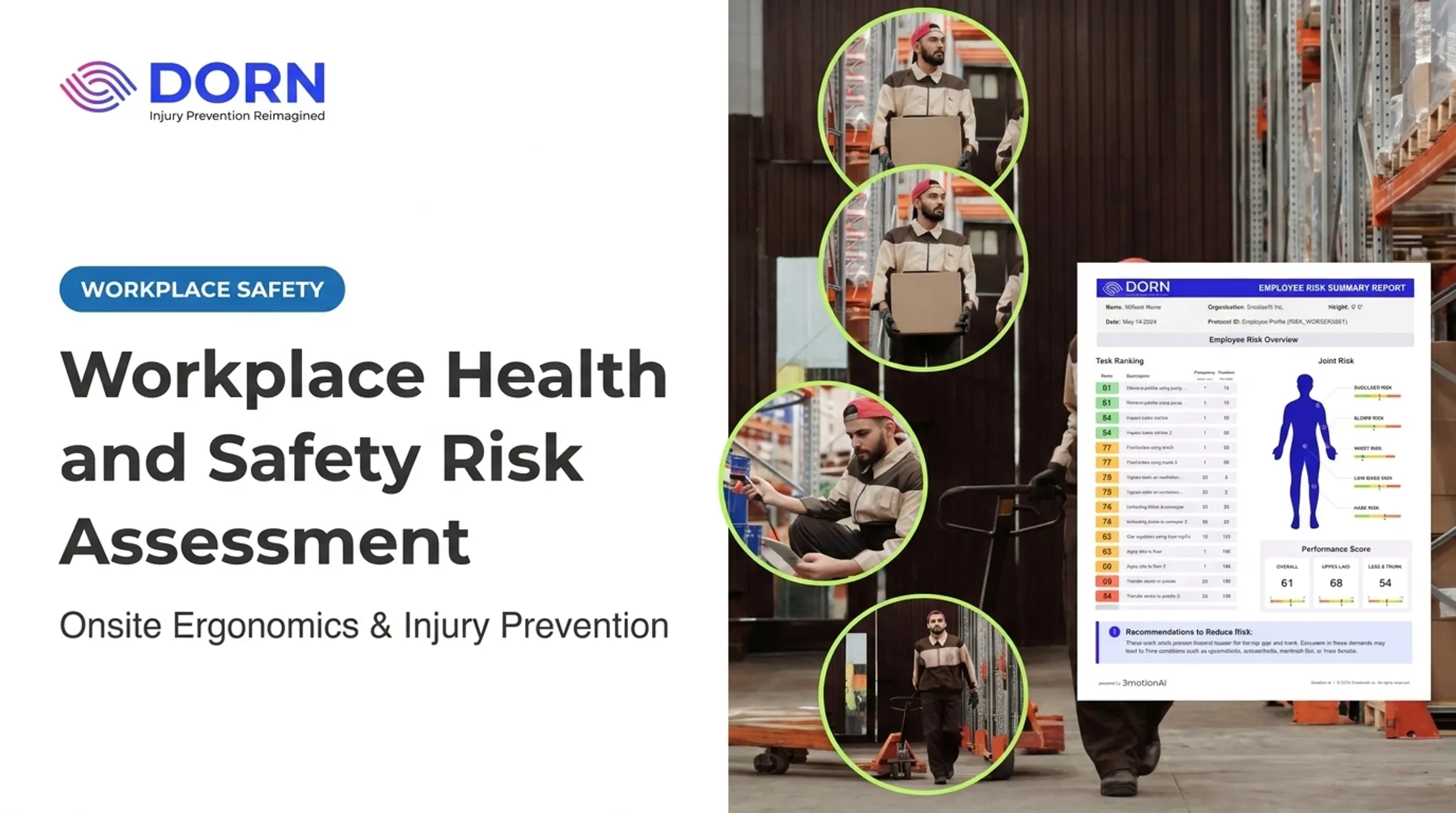
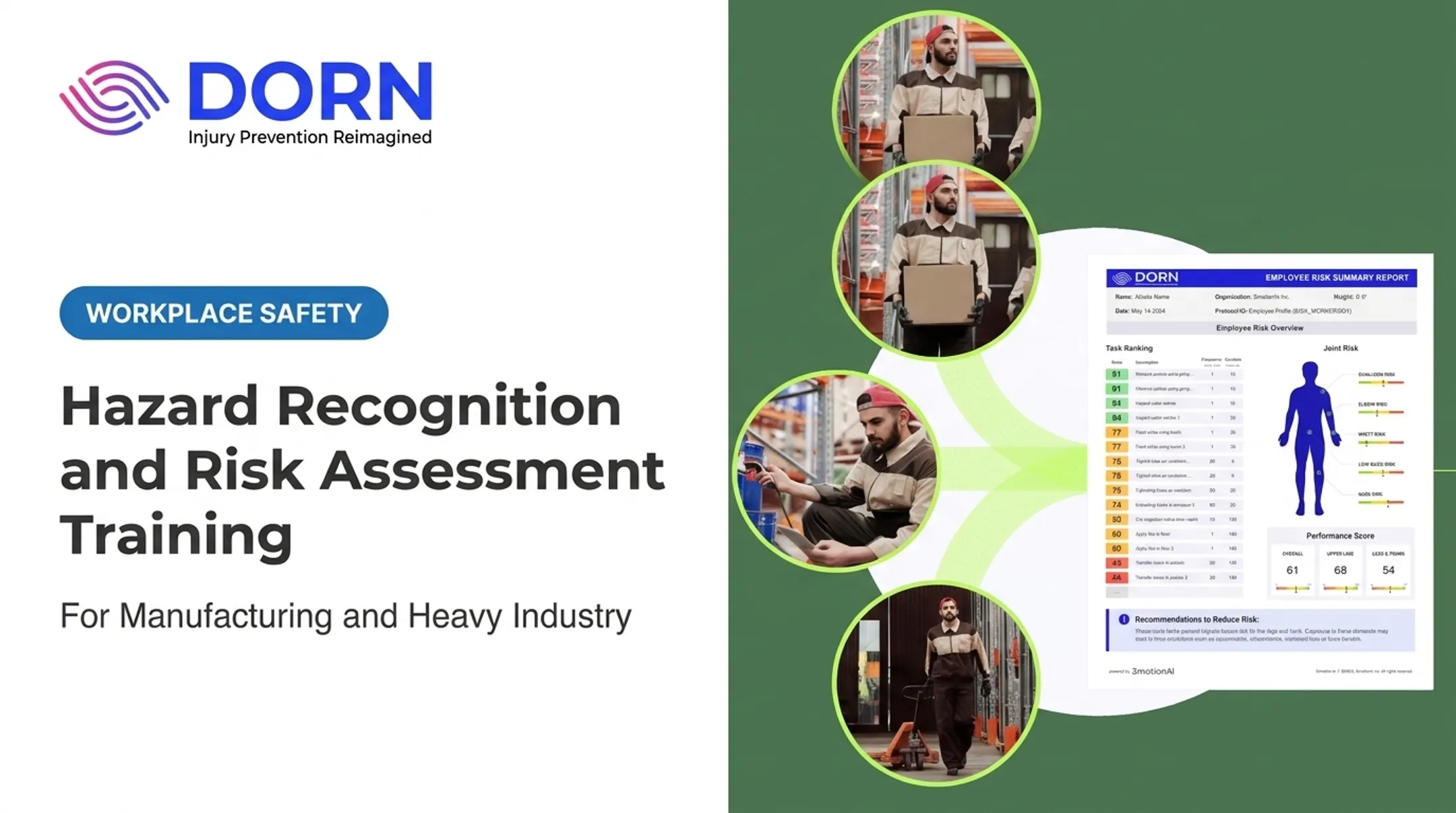
Some hazards need a trained eye. A Certified Industrial Ergonomic Evaluator or injury-prevention specialist can spot risk factors that internal teams miss, using tools like motion capture or wearables to quantify job demands objectively.
DORN Companies, for example, combines onsite ergonomic assessments, coaching, and technology-enabled tools such as AI motion capture to help identify high-risk tasks before they become injuries. Outside support complements internal leadership by sharpening where leaders focus next.

How to Measure and Sustain a Strong Safety Culture
A safety culture that isn't measured tends to drift. Here's how to keep it on track.
Build a Balanced Scorecard
Track leading indicators alongside lagging ones:
Leading indicators:
- Hazard and near-miss report volume and quality
- Corrective-action closure time
- Training participation and ergonomic assessment completion
- Employee perception survey results
Lagging indicators:
- Recordable injuries and lost-time cases
- Workers' compensation trends
- Workers' compensation trends
- Days away, restricted, or transferred (DART) rate
OSHA's guidance on leading indicators recommends using the leading measures to drive change and the lagging measures to confirm whether it worked.

Why More Reports Aren't Always Bad News
A spike in near-miss reports right after launching a new reporting channel usually means employees trust the system more, not that conditions got worse. Focus your evaluation on:
- Whether reports reveal recurring themes
- How fast corrective actions close
- Whether the same hazard shows up twice
Establish a Review Cycle
Assign owners and deadlines to every corrective action. Share progress with the workforce so participation doesn't feel like shouting into a void.
Revisit risk assessments whenever equipment, staffing, or processes change. Use incident investigations to learn, not to assign blame.
Overcoming Common Barriers
Multi-site or dispersed teams face predictable friction:
- Resistance to change: Pilot improvements at one site before rolling out company-wide
- Language differences: Adapt training materials and signage for every crew
- Production pressure: Involve frontline workers early so fixes fit real workflows
- Inconsistent management: Standardize core expectations, with site-specific controls for local risks
Frequently Asked Questions
How can I enhance safety culture in the workplace?
Start with leaders who set the example, accessible employee participation, and psychologically safe reporting. Pair that with proactive hazard control, role-specific training, and measurement of both leading and lagging indicators.
What are the key characteristics of a strong safety culture?
Shared responsibility, visible leadership commitment, open communication, and employee empowerment are core traits. Strong cultures also emphasize proactive prevention, continuous learning, clear expectations, and consistent follow-through on corrective actions.
What are the four C's of safety culture?
According to the UK Health and Safety Executive, they are Control (assigned responsibility), Communication (fast information flow), Co-operation (employee participation), and Competence (adequate training). The framework helps organizations evaluate practices already in place.