

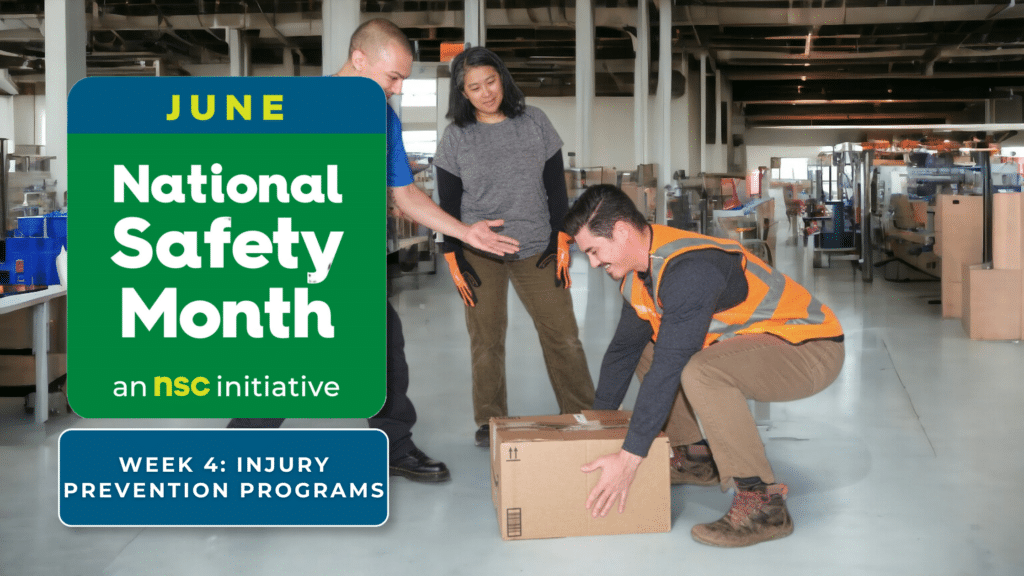
Every employer wants fewer workplace injuries, lower workers' compensation costs, and healthier employees. But an effective injury prevention program doesn't happen by accident; it requires a proactive strategy that identifies risks before they become injuries.
Too often, organizations focus on responding after someone gets hurt. The most successful companies take the opposite approach. They build a workplace culture that prevents injuries before they occur.
An effective workplace injury prevention program goes beyond OSHA compliance. It helps reduce musculoskeletal disorders (MSDs), improves employee well-being, lowers injury-related costs, and creates a safer, more productive workplace.
At DORN Companies, we've seen firsthand that organizations with the strongest safety records all have one thing in common: they invest in prevention rather than reaction.
In this guide, we'll cover the five essential elements every successful injury prevention program should include:
- Baseline assessments and employee screenings
- Employee engagement and micro-training
- Data tracking and safety analytics
- Early intervention and triage
- Ergonomic workstation assessments
Let's take a closer look.
Why Every Workplace Needs an Injury Prevention Program
A workplace injury affects much more than the injured employee. One incident can lead to:
- Workers' compensation claims
- Lost productivity
- Overtime costs
- Increased insurance premiums
- Lower employee morale
- Higher turnover
The good news is that many workplace injuries, especially musculoskeletal disorders, are preventable. The goal of an injury prevention program is simple: Identify risks early. Correct them before they become injuries. That proactive mindset is what separates average safety programs from exceptional ones.
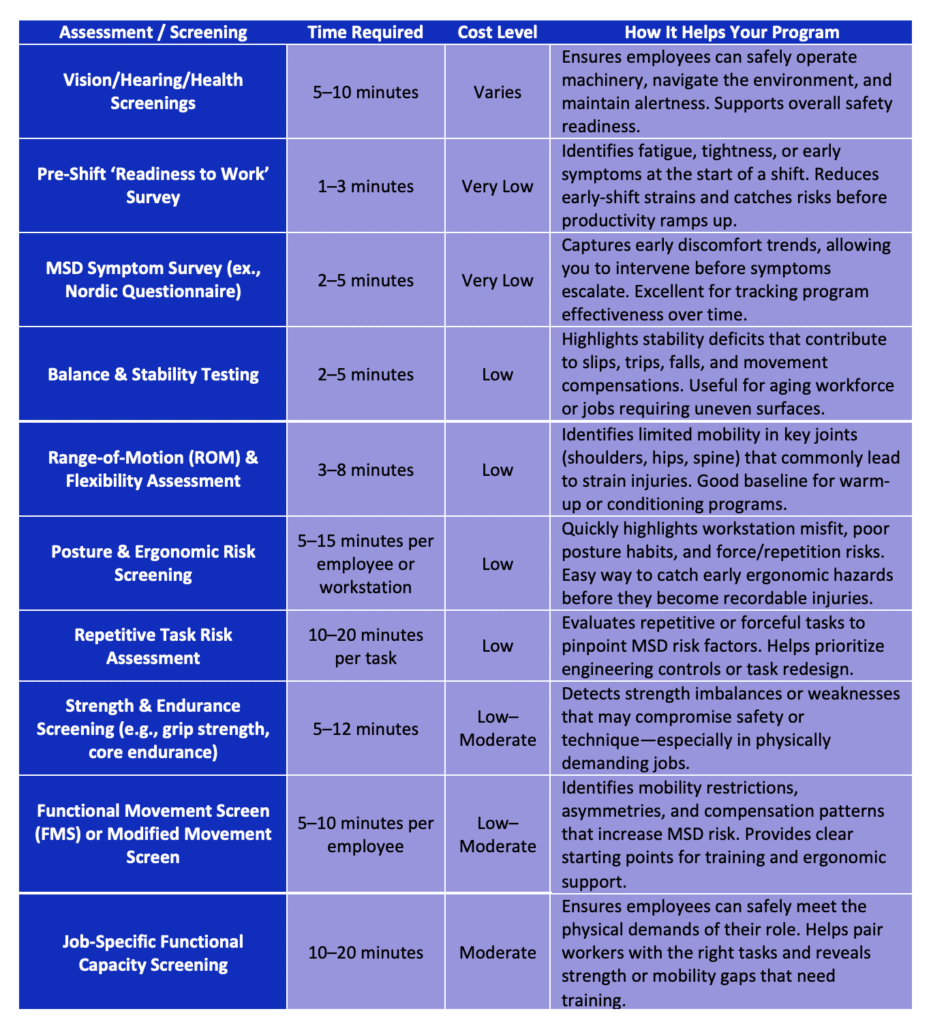
1. Baseline Assessments and Employee Screenings
Think about professional athletes. Before every season, athletes complete baseline testing so coaches understand their strengths, weaknesses, and potential injury risks.
Your employees deserve the same proactive approach.
At DORN Companies, we often refer to employees as industrial athletes because many jobs place tremendous physical demands on the body. Whether someone works in manufacturing, healthcare, warehousing, construction, or an office, understanding their baseline helps identify risks before symptoms become recordable injuries.
Baseline assessments can identify:
- Early musculoskeletal discomfort
- Mobility restrictions
- Fatigue
- Balance deficits
- Poor workstation fit
- Functional limitations
The goal isn't to test everything. It's to gather meaningful information that helps your organization make smarter safety decisions.
Baseline assessments create the foundation for a proactive injury prevention program. Rather than waiting for injuries to occur, organizations can identify risk factors early and implement targeted interventions before employees miss work or require medical care.
2. Employee Engagement and Micro-Training
Even the best injury prevention program won't succeed if employees aren't engaged. Safety isn't something employees should feel is "extra work." It should simply become part of how work gets done.
One of the most effective ways to accomplish this is through micro-training.
Instead of hour-long safety meetings that employees quickly forget, deliver focused training sessions that last just two to five minutes. Short, practical lessons fit naturally into the workday while reinforcing safe movement patterns and ergonomic habits.
Research consistently shows that frequent, bite-sized learning improves both knowledge retention and employee participation.
To maximize engagement:
- Keep training under five minutes.
- Make it task-specific.
- Explain why it matters.
- Use multiple communication formats.
- Connect topics to real workplace data.
- Measure participation and results.
The goal isn't simply to deliver training; it's to create a workplace where safety becomes second nature.
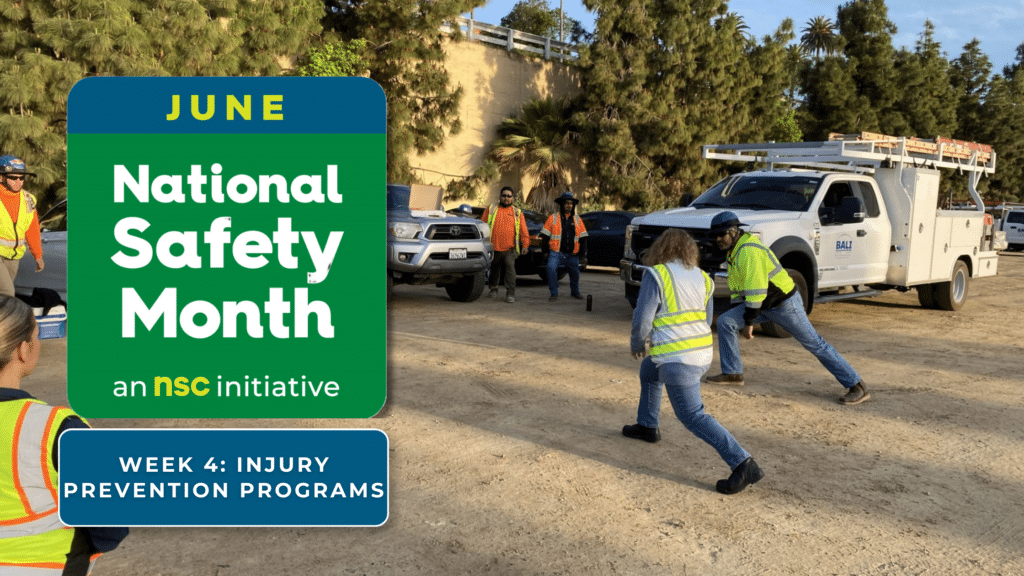
3. Use Data to Drive Better Safety Decisions
The strongest injury prevention programs don't rely on assumptions. They rely on data. Tracking employee trends allows organizations to identify potential problems before injuries occur.
Helpful metrics include:
- Employee symptom reports
- Ergonomic assessment findings
- Participation in training
- Baseline screening results
- Early intervention requests
- Near-miss incidents
Over time, these metrics reveal patterns. Perhaps one department reports shoulder pain more frequently. Maybe one workstation consistently produces discomfort. Instead of reacting after an injury occurs, you can address the root cause immediately. This is where injury prevention becomes predictive instead of reactive.
4. Early Intervention Makes All the Difference
One of the biggest mistakes organizations make is waiting too long. When employees ignore discomfort because they think "it's part of the job," small problems become expensive injuries.
An effective early intervention program encourages employees to report discomfort early, before it becomes a workers' compensation claim.
Successful programs include:
- Onsite evaluations
- Self-care recommendations
- Movement coaching
- Ergonomic adjustments
- Clear referral pathways when additional care is needed
Employees recover faster when issues are addressed early. Companies also experience:
- Fewer recordable injuries
- Reduced lost-time claims
- Lower healthcare costs
- Greater employee trust
Early intervention is one of the highest-return investments an organization can make.
5. Ergonomic Workstation Assessments
Ergonomics is one of the simplest and most effective ways to prevent workplace injuries. An ergonomic assessment examines how employees interact with their work environment and identifies opportunities to reduce unnecessary strain.
For office employees, this may involve:
- Monitor height
- Chair positioning
- Keyboard placement
For industrial workers, improvements may include:
- Tool selection
- Lift assists
- Workstation layout
- Shelf height
- Material flow
Small adjustments often prevent significant injuries. If your organization lacks in-house ergonomic expertise, partnering with experienced professionals can help identify practical improvements that deliver immediate results.
Key Takeaways
The most effective injury prevention programs don't rely on a single initiative. They combine:
- Baseline assessments
- Employee engagement
- Data-driven decision making
- Early intervention
- Ergonomic improvements
Together, these five elements create a proactive workplace safety program that reduces injuries, improves employee health, and lowers long-term costs.
The strongest organizations don't wait for injuries to happen. They build systems that help prevent them.
If your organization is looking to strengthen its injury prevention program, DORN Companies can help. From ergonomic assessments and on-site injury-prevention services to employee education and early-intervention programs, we partner with organizations to build safer, healthier workplaces.
Frequently Asked Questions
What is an injury prevention program?
An injury prevention program is a proactive workplace safety strategy designed to identify hazards, reduce risk factors, and prevent injuries before they occur. Effective programs combine employee education, ergonomic assessments, data tracking, early intervention, and continuous improvement.
What are the five elements of an injury prevention program?
A successful injury prevention program includes:
- Baseline assessments and screenings
- Employee engagement and micro-training
- Data and safety analytics
- Early intervention and triage
- Ergonomic workstation assessments
Why are injury prevention programs important?
Strong injury prevention programs reduce workplace injuries, improve employee health, lower workers' compensation costs, decrease absenteeism, and create a stronger safety culture.
How do ergonomic assessments help prevent workplace injuries?
Ergonomic assessments identify workstation and task-related risk factors that contribute to musculoskeletal disorders. Making small adjustments to tools, equipment, or workstations can significantly reduce strain and improve employee comfort and productivity.
National Safety Month, Week 4: Build Systems That Prevent Injuries
As we wrap up National Safety Month, remember that creating a safer workplace isn't about one initiative or one month of awareness; it's about building systems that support injury prevention every day.
This week, challenge your team to strengthen the foundation of your safety program by taking a few simple but meaningful actions:
- Start a safety conversation. Ask your team, "What's one thing we could improve to make your job safer?"
- Recognize safe behaviors. Celebrate employees who consistently demonstrate safe work practices and encourage others to do the same.
- Promote peer-to-peer accountability. Empower employees to look out for one another and speak up when they notice opportunities to improve safety.
- Learn from the past. Review recent incidents, near misses, or ergonomic concerns and discuss what can be done to prevent them from happening again.
- Look for opportunities to be proactive. Small ergonomic improvements, early intervention, and employee feedback can prevent minor discomfort from becoming recordable injuries.
Safety is never "finished." The strongest injury prevention programs are built on continuous improvement, a commitment to asking, "How can we better protect our employees today than we did yesterday?"
- Open a safety conversation with your team, and ask what could be improved
- Recognize small wins and safe behaviors
- Encourage peer-to-peer safety feedback
- Revisit past incidents and turn them into learning opportunities
Safety is a living process. Continuous improvement means we never stop asking: “How can we do better, for our people, for their families, and for the future of work?”
National Safety Month Series Recap
Throughout June, we've explored practical ways organizations can build a stronger, more proactive workplace safety culture:
Week 1: Improve your injury prevention program
Week 2: Understanding Leading Indicators
Week 3: AI and Ergonomics
Week 4: Build systems that prevent injuries
While National Safety Month may be ending, the work of protecting your employees continues year-round.
If your organization is planning for 2026–2027 safety initiatives, now is an excellent time to evaluate your injury prevention program, ergonomic assessment strategy, early intervention process, and overall workplace safety goals.
DORN Companies partners with organizations across the country to reduce workplace injuries through proactive ergonomics, onsite injury prevention, early intervention, safety training, and data-driven workplace health solutions.
Ready to strengthen your injury prevention program? Contact DORN Companies to schedule a consultation and discover how we can help you build a safer, healthier, and more productive workplace.
References:
ASSP Worker Engagement and Improved Safety Management Systems https://www.assp.org/news-and-articles/how-worker-engagement-can-help-improve-your-safety-management-system
OSHA Recommended Practices for Safety and Health Programs https://www.osha.gov/safety-management/education-training
NIOSH Workplace Safety and Health Topics https://www.cdc.gov/niosh/topics/default.html
Workplace Musculoskeletal Disorder Prevention Practices and Experiences
https://journals.sagepub.com/doi/epub/10.1177/00469580221092132