

In our last DORN blog, we introduced the difference between leading and lagging indicators and discussed why both are essential to an effective workplace safety strategy. This week, we're taking a deeper dive into some of the most powerful leading indicators organizations can track to identify risk before injuries occur.
For many employers, safety metrics focus heavily on lagging indicators such as recordable injuries, workers' compensation claims, lost-time incidents, and OSHA rates. While these measures are important, they only tell us what has already happened.
Leading indicators tell us what is likely to happen next.
By monitoring the conditions, behaviors, and workforce trends that contribute to injuries, organizations can identify emerging risks, implement targeted interventions, and create safer, healthier workplaces before incidents occur.
A Quick Refresher: Leading vs. Lagging Indicators
A lagging indicator measures an outcome that has already occurred.
A leading indicator measures a condition, behavior, or trend that predicts future outcomes.
Think of a vehicle's warning lights. A low-fuel warning light is a leading indicator, it alerts you to a problem before your car stops running. Running out of gas on the highway is the lagging indicator.
The same principle applies to workplace safety. Injuries, claims, and absenteeism are outcomes. Pain, fatigue, stress, and other workforce conditions often serve as warning signs that those outcomes may be on the horizon.
Organizations that effectively monitor leading indicators gain the ability to act proactively rather than reactively.
Leading Indicator #1: Employee Pain Levels
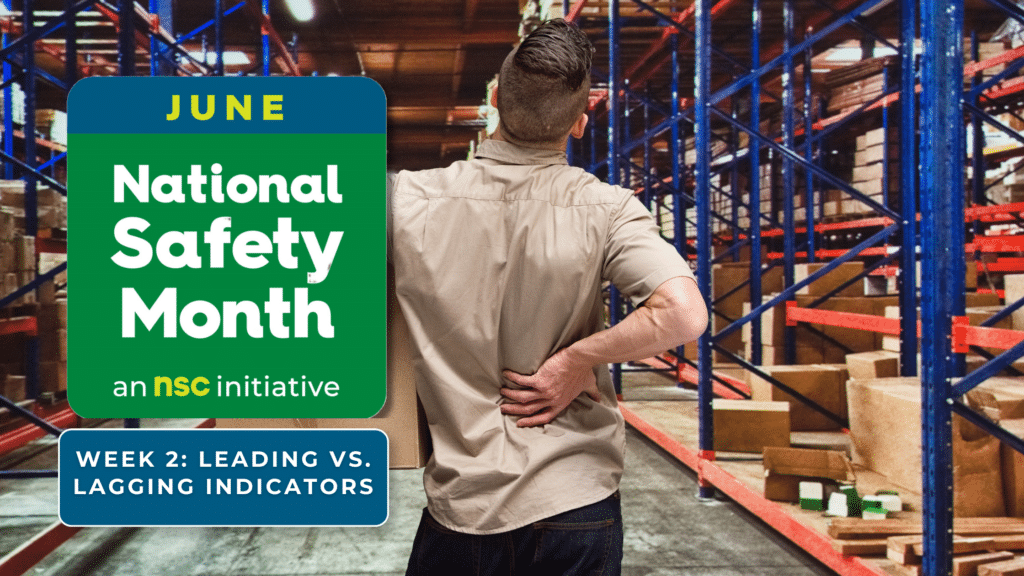
Pain is one of the most important and often overlooked predictors of workplace injury risk.
More than 51 million American adults experience chronic pain each year. In the workplace, pain contributes to distraction, reduced focus, increased fatigue, and a greater likelihood of musculoskeletal injuries such as strains, sprains, and overexertion injuries.
Research shows that approximately 80% of workers experiencing pain report that it negatively impacts their concentration and ability to focus on tasks. When employees are distracted by discomfort, injury risk rises.
Perhaps more importantly, pain often signals a mismatch between workers and their work environment. Poor workstation design, repetitive tasks, excessive force requirements, inadequate recovery time, and outdated equipment can all contribute to chronic discomfort long before a recordable injury occurs.
Pain should never be viewed simply as an individual health issue. It is often valuable feedback about workplace systems and processes.
Organizations can monitor pain levels through:
- Employee surveys
- Supervisor observations
- Focus groups and safety conversations
- Early discomfort reporting programs
- Ergonomic assessments
Programs such as ERGO Aware training can help supervisors identify signs of discomfort early and intervene before minor issues become serious injuries.
Leading Indicator #2: Medication Usage
Medication usage can provide another important window into workforce health and injury risk.
Prescription pain medications are frequently used following workplace injuries, but they are also commonly prescribed to workers experiencing chronic pain unrelated to a specific incident. Approximately one-third of workers' compensation claims involving prescriptions include opioid medications.
While medication use alone does not cause workplace injuries, elevated usage levels often indicate underlying pain and physical stress within the workforce.
In many cases, rising medication utilization serves as a secondary indicator that employees may be working through discomfort, compensating for poor ergonomic conditions, or struggling with unresolved musculoskeletal issues.
When medication usage trends increase, safety leaders should view it as a signal to investigate:
- Ergonomic hazards
- Workstation design
- Repetitive-motion exposures
- Forceful exertions
- Task design and workflow inefficiencies
Addressing root causes rather than symptoms is the most effective path toward sustainable injury reduction.
Leading Indicator #3: Fatigue Levels
Fatigue remains one of the most significant and pervasive risks across nearly every industry.
Whether caused by long shifts, excessive overtime, poor sleep quality, demanding workloads, or stress, fatigue directly affects decision-making, reaction time, situational awareness, and physical performance.
The data is compelling:
- Approximately 13% of workplace injuries are linked to sleep-related issues.
- Workers with sleep problems are 62% more likely to experience an injury.
- Longer working hours and shorter sleep duration are consistently associated with increased injury risk.
Research also shows that injury rates rise significantly among employees who regularly sleep fewer than five hours per night, particularly when combined with extended workweeks.
Because fatigue is often invisible, organizations must intentionally measure it.
Effective approaches include:
- Employee fatigue surveys
- Supervisor check-ins
- Pre-shift and mid-shift alertness assessments
- Wearable monitoring technologies
- Schedule and overtime reviews
Organizations can reduce fatigue-related risk by improving shift design, limiting excessive overtime, enhancing sleep education, and addressing workplace conditions that unnecessarily increase physical demands.
Leading Indicator #4: Workforce Demographics and Generational Trends
The composition of today's workforce continues to evolve as experienced workers remain employed longer and younger generations enter the labor market.
These demographic shifts create unique safety challenges and opportunities.
Younger workers generally experience higher injury rates due to limited experience, unfamiliarity with hazards, and reduced exposure to safety practices.
Older workers, while often experiencing fewer incidents, may face more severe injury outcomes and longer recovery periods when injuries occur.
Recent research suggests that nearly half of Baby Boomers either plan to continue working beyond age 70 or do not intend to retire at all. As a result, many organizations will continue managing increasingly multigenerational workforces for years to come.
Understanding workforce demographics helps organizations anticipate:
- Training needs
- Return-to-work requirements
- Communication preferences
- Ergonomic accommodations
- Injury severity trends
Safety programs are most effective when they recognize and address the distinct strengths and risks associated with different workforce populations.
Leading Indicator #5: Absenteeism, Turnover, and Morale
One of the clearest signals of organizational health often appears outside traditional safety metrics.
Absenteeism, turnover, and employee morale can reveal underlying issues that directly influence safety performance.
Growing research continues to demonstrate strong connections between mental health, stress, burnout, and injury risk:
- Up to 80% of workers report experiencing work-related stress.
- More than half of workplace injuries have been associated with mental health factors.
- Severe depression can reduce cognitive performance by as much as 35%.
- Workplace stress contributes significantly to healthcare costs, lost productivity, and disengagement.
Because stress, burnout, and psychological strain are not always easy to measure directly, organizations should monitor the indicators that often accompany them.
Absenteeism
Increasing absenteeism may signal:
- Fatigue
- Chronic pain
- Burnout
- Mental health challenges
- Workplace culture concerns
Turnover
High turnover rates can indicate that employees are experiencing unresolved challenges significant enough to drive them away from the organization.
Morale
Employee morale can be assessed through:
- Anonymous surveys
- Focus groups
- Safety culture assessments
- Supervisor engagement initiatives
Low morale frequently correlates with lower engagement, weaker safety participation, reduced reporting, and increased injury risk.
These indicators collectively provide valuable insight into the overall health of both the workforce and the organization's safety culture.
The Bottom Line: Prevention Starts Before the Injury
The most successful safety programs don't simply investigate incidents after they occur, they actively search for warning signs before they happen.
Pain, medication usage, fatigue, workforce demographics, absenteeism, turnover, and morale all provide valuable insight into future injury risk. When organizations monitor these indicators consistently and respond proactively, they gain the ability to prevent injuries, improve employee well-being, strengthen productivity, and control costs.
As we continue recognizing National Safety Month, it's important to remember that every injury has a story that begins long before the incident itself. Leading indicators help organizations identify that story early—creating opportunities to intervene, protect workers, and build a safer, healthier workplace for everyone.
How to Build Momentum This Week
- Open a safety conversation with your team, and ask what could be improved
- Recognize small wins and safe behaviors
- Encourage peer-to-peer safety feedback
- Revisit past incidents and turn them into learning opportunities
Safety is a living process. Continuous improvement means we never stop asking: “How can we do better, for our people, for their families, and for the future of work?”
Stay tuned each week in June as we dive into other vital themes:
Week 1: Improve your injury prevention program
Week 2: Understanding Leading Indicators
Week 3: AI and Ergonomics
Week 4: Build systems that prevent injuries
If you're looking to strengthen your workplace safety program, reduce injuries, or explore how ergonomic assessments can support your 2026-2027 safety goals, we're here to help.
Let’s talk about your safety goals, injury prevention strategy, or budget planning. Contact DORN today to learn more or schedule a consultation.